
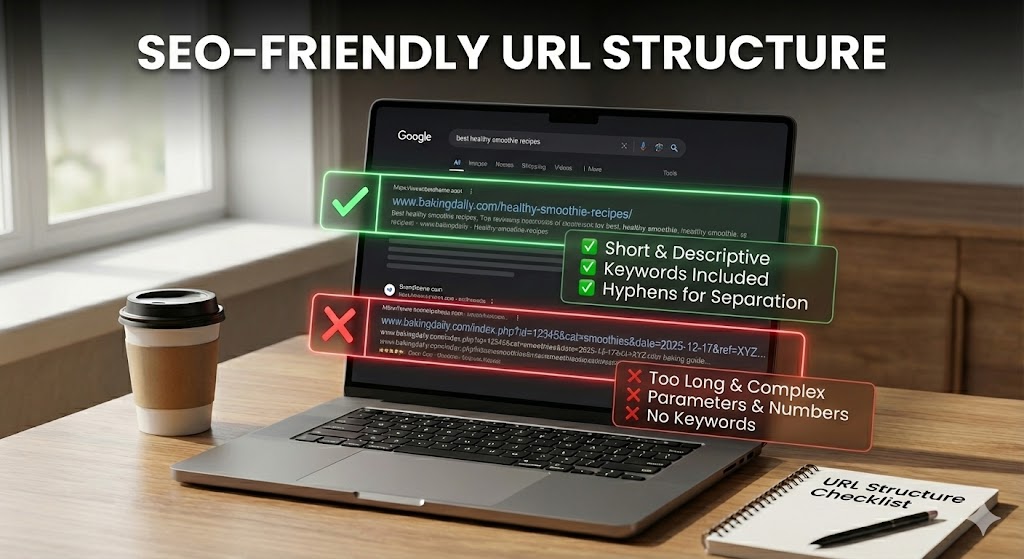
A URL is the address of a page on the web, telling both people and search engines where a page lives and what it is about. When your URL is clear and well organized, it becomes a simple map that guides visitors and helps search engines understand your site faster.
A good URL structure is more than just a technical detail. It can strongly support your search engine optimization efforts by making every page easier to find, crawl, and index. When words in the URL match the page content, search engines can better decide how and when to show that page in results.
For users, a clean, simple, and descriptive URL builds trust and sets clear expectations before they even click. It also makes links easier to remember, share, and revisit later. By learning how to design an SEO-friendly URL structure, you improve both search visibility and everyday user experience, setting a strong base for all other SEO work on your website.
SEO-Friendly URL Structure
Before diving into specific rules, it helps to see URL structure as the backbone of how your site is organized. A thoughtful layout creates a clear path for both users and crawlers, turning every address into a simple signpost that points to the right content.
Have you ever looked at a long, messy web address and felt unsure about clicking it? That reaction is exactly why a well-planned URL structure matters. The way your links are built quietly shapes how both people and search engines move through your site.
In this part, the focus moves from basic ideas to the practical rules that guide a strong URL layout. An effective structure groups related pages, keeps paths predictable, and uses words that match real search intent.
When planning this layout, think of your website like a neatly labeled library. Each folder and word in the path should reflect a clear topic, such as /services/web-design/ or /blog/seo-tips/, instead of random IDs. This kind of order helps crawlers discover new pages faster and reduces the risk of duplicate content across similar addresses.
To apply this in practice, keep important categories near the root, avoid deep chains like /a/b/c/d/e/, and design patterns you can reuse. Over time, a stable, logical structure supports stronger internal linking, cleaner navigation, and more reliable performance in search.
Introduction to URLs and SEO
Understanding how URLs connect to SEO makes it easier to see why structure matters so much. This section builds on the idea of layout and explains how each individual address influences both rankings and user behavior.
When two pages talk about the same topic, why does one appear higher in search results? Often, a quiet part of the answer lies in how its address is written. The path shown in the browser bar sends early clues about meaning, trust, and structure.
In basic terms, a URL connects a user’s intent to a specific resource. For search engines, a well-optimized path works like labeled shelves in a library, helping algorithms group related documents and measure their topical relevance. Clean patterns also reduce crawling waste, so important content is found and refreshed more often.
From the human side, predictable, descriptive links lower hesitation before a click and make it easier to guess what happens if you trim folders, such as moving from /blog/seo-url-tips/ up to /blog/. Over thousands of visits, this clarity can improve engagement signals, which in turn support stronger visibility across competitive queries.
What Is an SEO-Friendly URL?
Once you understand the connection between URLs and SEO, the next step is defining what a strong address actually looks like. Here, the focus shifts to the specific traits that make a URL both readable and useful for ranking.
Imagine reading a book where every chapter is named with random numbers. You could still read it, but finding the right chapter would feel slow and confusing. Web addresses work the same way for both visitors and search engines.
An SEO-friendly URL is a clear, simple address that describes the page topic in plain words and follows a consistent pattern across the site. Instead of a string of symbols and IDs, it uses readable terms, logical folders, and helpful keywords, such as /blog/seo-friendly-url-structure/. This makes it easier for algorithms to understand meaning and relevance at a glance.
- For users, these URLs are easy to read, trust, and remember.
- For search engines, they act as a quick label that supports proper indexing and ranking.
As Rand Fishkin once noted, “A great URL is a promise about the content behind it.” When that promise is honest and clear, both people and crawlers navigate your website with less effort and more confidence.
Why URL Structure Matters for SEO Visibility
Knowing what a good URL looks like naturally leads to the question of impact. This section explains how structure influences crawling, relevance, and the way users choose which results to click.
Picture two links in search results: one neat and clear, the other long and confusing. Even before reading the title, most people feel safer clicking the cleaner option. That quiet choice happens millions of times a day and directly shapes which pages rise or fall.
A well-structured URL pattern gives search engines strong hints about site hierarchy, letting them crawl fewer useless paths and focus on valuable content. When folders and filenames follow a consistent logic, algorithms can group related pages, pass link equity through internal links more efficiently, and surface the right page for each query.
Clear paths also reinforce topical relevance signals. If many external sites link using the same descriptive URL, that address becomes a stable reference point for specific intents, such as informational or transactional searches. Over time, this alignment between structure, links, and intent supports stronger search visibility across entire sections of your domain.
Best Practices for an SEO-Friendly URL Structure
With the importance of structure and visibility in mind, it becomes easier to apply concrete guidelines. The following practices turn high-level principles into everyday decisions for naming and organizing your URLs.
Have you ever tried to guess what a page is about just by looking at its address bar? When that guess is easy and accurate, it is usually because the site follows a few simple, reliable rules for clear and consistent URLs.
To turn those rules into daily habits, focus on making every address short, meaningful, and easy to scan. The aim is to help both visitors and crawlers understand the topic and place of a page in just a second.
- Keep paths short and descriptive, avoiding extra folders and random numbers.
- Use readable words with hyphens, like /on-page-seo-guide/, not /on_page_seo_guide/.
- Include one main target keyword where it fits naturally, without stuffing.
- Prefer simple, static-looking URLs instead of long strings of parameters.
- Stick to lowercase letters to prevent duplicate versions of the same page.
“Readable URLs improve both user trust and crawl efficiency.” – Cindy Krum
SEO-Friendly URL Structure: Good vs Bad Examples
Best practices become much clearer when you see them in action. This section contrasts strong and weak URL patterns so you can quickly recognize what helps or hurts both SEO and usability.
Have you ever copied a link into a message and felt unsure if the person receiving it would know what it was? That moment of doubt is often the difference between a good URL and a confusing one. Clear examples make it easier to see what actually helps search and users in daily practice.
This section compares strong, descriptive paths with weak ones so you can spot patterns, not just memorize rules. By the end, you should be able to look at any address and quickly judge whether it supports your SEO-friendly URL structure or quietly works against it.
Consider a simple product page. One version might look like:
- Good: example.com/shoes/running-shoes/
- Bad: example.com/prod?id=78453&type=rs
The first path uses clear folders and readable words that match search intent, while the second hides meaning behind IDs and parameters, making it harder for both people and crawlers to understand at a glance.
On content sites, the contrast can be just as sharp:
- Good: example.com/blog/email-marketing-basics/
- Bad: example.com/blog/2025/01/08/post-12/
In the stronger version, the slug highlights the main topic and avoids empty labels like post-12. Extra date folders in the weaker pattern add depth without real value and can suggest content is old, even if it is still useful.
Even small changes in wording can shift clarity. Compare:
- Good: example.com/services/local-seo-audit/
- Bad: example.com/services/lsa123/
Both might lead to the same offer, but only the first spells out what the page delivers in everyday language. When users share that link or when it appears as anchor text, the words inside the path reinforce topical relevance without extra effort.
Handling URL Changes and Their SEO Impact
As your site grows, you may need to rename pages or reorganize sections. This part shows how to manage those changes without losing the SEO value your URLs have already earned.
Have you ever renamed a file on your computer and then watched old shortcuts stop working? Changing web addresses works in a similar way, but the side effects reach search engines, bookmarks, and links from other sites. Careful planning is needed so that improvements in structure do not quietly damage your search visibility.
Any time you edit a slug, move content into a new folder, or switch domains, you create a new address. The old URL may still hold backlinks, authority, and user bookmarks, so letting it simply vanish often leads to traffic loss. Instead, you need a plan that preserves that value while still allowing cleaner, more SEO-friendly URL structure over time.
Before changing anything, list the pages involved and ask why the update is needed. Good reasons include removing dates or IDs, fixing keyword stuffing, or merging thin pages into a stronger resource. Poor reasons include minor wording tweaks that add no clarity but force search engines to re-learn an already successful address.
When a change is truly necessary, the safest approach is to use 301 redirects from every old URL to its single best new match. This passes most existing authority, helps crawlers update their index, and guides users who click old links to the right content. Avoid redirect chains like /old → /older → /new, which waste crawl budget and slow loading.
- Plan in batches for large sites so patterns stay consistent.
- Update internal links to point directly to the new URLs.
- Monitor traffic and rankings for a few weeks after a migration.
Handled carefully, URL updates can turn a messy legacy structure into a stable, descriptive system that supports growth. Rushed or unplanned edits, however, often break valuable paths and send mixed signals, making it harder for both people and crawlers to trust and follow your site.
Common URL Structure Mistakes and How to Avoid Them
Even with clear goals, small errors in URL design can spread quickly across a site. This section highlights frequent missteps so you can prevent them early or correct them before they harm performance.
Ever wondered why some sites feel easy to explore while others seem tangled and messy? Often, the difference comes down to a handful of quiet errors in how their addresses are built. By spotting these early, you can protect both search visibility and user trust without constant repairs.
The following points highlight frequent pitfalls that weaken an otherwise strong SEO-friendly URL structure. Each mistake includes a simple fix so you can adjust patterns before they spread across your entire domain.
- Overly long paths packed with extra folders or words that add no meaning.
- Random IDs and parameters used where clear, static slugs would work better.
- Inconsistent naming, such as mixing hyphens, underscores, and vague codes.
- Unnecessary dates that make evergreen content look old at a glance.
- Keyword stuffing in slugs, which can look spammy to visitors and crawlers.
- Case mix-ups that create duplicate versions of the same resource.
- Changing URLs often without proper redirects, losing built-up equity.
As John Mueller has noted, stable, readable URLs act like long-term addresses that help search engines and people keep finding the right page over years, not weeks.
Bringing Your URL Strategy Together for Stronger SEO
All of these elements—structure, clarity, stability, and careful changes—work together to shape your overall URL strategy. When they align, your site becomes easier to crawl, easier to understand, and easier to trust.
Shaping an SEO-friendly URL structure is not about tricks; it is about giving every page a clear, stable address that matches its real topic. When your paths are short, readable, and well organized, they quietly support better crawling, indexing, and user trust without extra effort.
Across your site, think of URLs as long-term labels that tie site hierarchy, internal links, and topical relevance into one simple pattern. Avoid common traps like random IDs, keyword stuffing, and frequent changes, and use careful redirects when updates are truly needed so that hard-earned authority is not lost.
By treating each new address as a small but important design choice, you create a structure that scales with your content and stays easy to understand for both people and algorithms, turning your SEO-friendly URL structure into a lasting advantage for search visibility and user experience.