
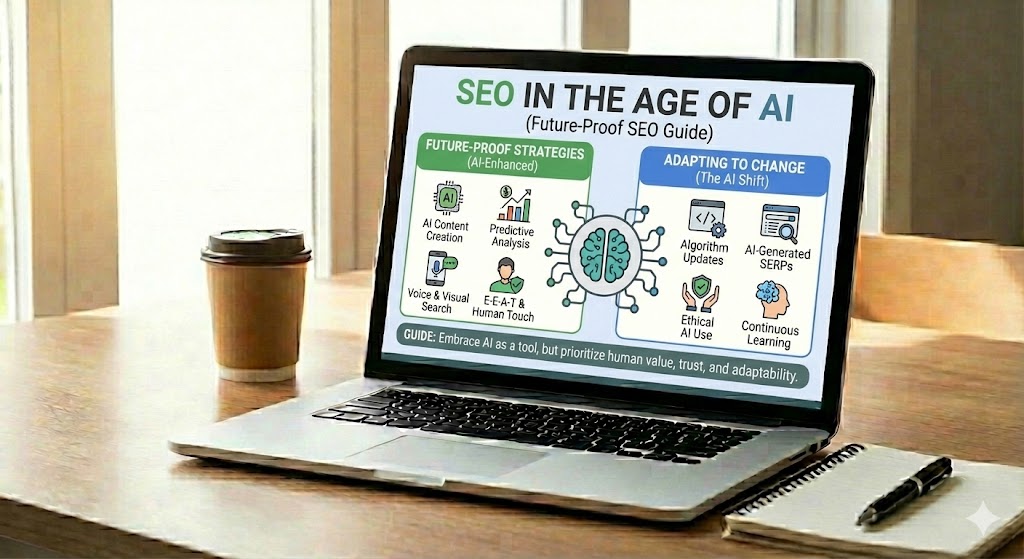
Search engines are changing fast because of artificial intelligence (AI). In simple words, AI is when computers learn from data and make smart choices, a bit like a student who keeps improving after many lessons. Today, AI helps search engines read, compare, and judge web pages in a way that feels closer to how people think, using methods such as machine learning and natural language processing.
Many people worry that this new power means AI will fully replace SEO. They see AI tools writing articles, answering questions, and showing direct results, and they fear there will be no need to rank pages anymore. But SEO is not vanishing; instead, the rules of good SEO are becoming stricter and more logical, rewarding pages that are truly useful, clear, and trustworthy.
In this new environment, you cannot rely on old tricks or random keyword lists. Search engines now focus on understanding meaning, intent, and real-world value. To succeed, you need to learn how AI shapes search, how to align content with user needs, and how to build steady trust over time. This guide will walk you through those advanced, but beginner-friendly, strategies step by step.
Understanding SEO in the Age of AI
Before adjusting tactics, it helps to understand what has actually changed in how search engines “think.” In the AI era, rankings depend less on clever shortcuts and more on how directly a page helps someone achieve a goal.
Why do some pages rise to the top while others never seem to appear, even when they share the same topic? The answer now lies less in tricks and more in how clearly a page helps real people solve real problems. AI-powered systems reward content that behaves like a helpful guide, not like a noisy billboard.
At its core, SEO in the Age of AI is about matching three things: what a person wants, what your page offers, and how clearly machines can read that offer. Modern algorithms use natural language processing to compare user questions with page meaning, not just with single words. This means that structure, clarity, and context all become ranking signals.
In practice, this new landscape turns old habits into risks. Pages that rely on repeated phrases, thin explanations, or copied ideas are easier for machine learning models to detect and ignore. Instead, search engines look for signals such as:
- Topic depth – Does the page fully answer common follow-up questions?
- Intent alignment – Is the content built for learning, buying, or comparing, as the user expects?
- Real-world value – Would a human feel helped enough to stay, return, or share?
These shifts do not remove the need for optimization; they redefine it. Future-proof SEO means designing pages so that both people and AI can instantly see why your answer is the right one, at the right time, for the right search.
How AI Is Changing Modern SEO Practices
Once you understand the new expectations, the next step is seeing how they reshape day-to-day SEO work. AI affects what you publish, how you connect it, and even how your answers appear in the results.
Imagine trying to talk to a friend who only understands single words, not full sentences. Now imagine that friend suddenly learns to understand stories, feelings, and context. That is the kind of jump AI has brought to search, and it quietly changes how every page is judged.
Instead of only counting keywords, modern systems build a full picture of meaning, intent, and value. This shift affects how pages are written, structured, and connected, and it pushes SEO toward methods that feel much closer to clear communication than to clever tricks.
One major change is how engines form a topic map of the web using machine learning. They group related ideas, spot gaps in coverage, and compare your page to thousands of similar documents. A site that covers a subject with connected, well-ordered articles sends a stronger signal than a single, isolated post.
Because of this, content clusters and internal linking gain extra weight. When related guides link to each other in a logical way, AI models can see your site as a helpful hub rather than a random collection of pages.
Another transformation appears in how engines read language. With advanced natural language processing, systems evaluate clarity, structure, and answer completeness. Short, shallow paragraphs that dodge real questions are easier to down-rank, even if they look “optimized” on the surface.
To match this, on-page work now focuses on elements that guide both people and machines: descriptive headings, step-by-step explanations, and concise summaries that make the main answer obvious within a few seconds of scanning.
- Structured data helps AI recognize products, FAQs, and how-to steps.
- Clean HTML makes it easier to separate main content from clutter.
- Consistent terminology reduces confusion for both readers and models.
Beyond reading pages, AI also shapes how results are shown. Systems generate summaries, answer boxes, and conversational replies that pull from many sources at once. In this environment, being quoted or used as a source matters as much as holding a classic blue-link position.
To be chosen, a page needs strong evidence of accuracy and trust: clear authorship, up-to-date facts, and signals of real-world expertise. As Rand Fishkin notes, “Search engines increasingly reward the sources they trust most, not just the ones that shout the loudest.”
Core SEO Fundamentals That Still Matter
Even as AI reshapes tactics, some principles remain stable and even grow in importance. These fundamentals keep your strategy grounded while you adapt the details.
When tools, trends, and tactics keep changing, what can you safely keep doing year after year? Certain core SEO fundamentals stay useful no matter how smart search engines become, because they are built around helping real people first.
These basics may sound simple, but in the SEO in the Age of AI landscape, they act like strong foundations. AI systems actually rely on them to judge which pages are clear, reliable, and worth showing to users.
First, helpful content remains the center of everything. A page that answers a real question in plain language, gives clear steps, and covers common follow-ups will always perform better than a page that only chases phrases. Modern models use natural language processing to spot whether an answer is complete, practical, and easy to follow.
Second, clean structure still guides both humans and machines. Simple headings, short paragraphs, and logical order help AI understand your topic map, and they help readers avoid confusion or frustration.
- Descriptive titles that state the main task or topic.
- Clear headings that break big ideas into small parts.
- Ordered lists for steps and bullet lists for options or tips.
Finally, a steady user-first mindset ties these elements together. Instead of asking “How do I rank?”, ask “How do I make this page the easiest way to solve this problem?”. That single shift keeps your choices aligned with how AI-driven search now judges quality and value.
Content Strategy for SEO in the Age of AI
With the fundamentals in place, the next challenge is planning content that works as a whole, not just page by page. A clear strategy makes it easier for AI to see your site as an organized source of answers.
What happens when search engines can read like careful students instead of fast skimmers? Your content strategy must move from chasing clicks to building clear, lasting explanations that AI systems can trust and reuse. In this section, you will see how to plan and organize information so that both people and machines quickly understand why your page deserves attention.
A strong plan starts with knowing exactly which problems you solve and how each page supports that goal. Instead of publishing random posts, think in terms of topics, questions, and journeys: what someone asks first, what they ask next, and which details they need before taking action. This approach turns your site into a connected map of useful answers rather than a stack of isolated articles.
To do this well, focus on a few simple but powerful steps:
- Group related articles into topic clusters that cover one subject from many angles.
- Create one pillar page that gives a full overview, then link to deeper guides for details.
- Use internal links so readers and AI can follow a clear path through your information.
AI systems also pay attention to how clearly you express each answer. Short, focused pages with direct explanations, plain language, and concrete examples help models match your content to many different ways users might ask the same thing. When you define terms, show simple steps, and explain why something matters, you make it easier for natural language processing models to treat your page as a reliable source.
Real-world planning means deciding which questions deserve deep coverage and which only need brief notes. A common rule is that high-intent, high-value topics (such as buying choices or key definitions) should receive your best, most complete guides, while minor points can live as short supporting pages. Over time, this mix tells search engines that your website offers both breadth and depth on the areas where you want to be seen as an authority.
“Content strategy is no longer about publishing more; it is about publishing what clearly fits together.” – Kristina Halvorson
Technical SEO and Site Performance in an AI-Driven World
Strong ideas and well-structured content still rely on solid technical foundations to perform. If crawlers cannot easily access, render, and interpret your pages, even excellent work will struggle to rank.
Why do two pages with similar content perform so differently in search? Very often, the hidden reason is technical health: how easily AI systems can load, read, and trust your site. In an AI-driven landscape, invisible errors and slow code quietly limit how far even great content can go.
Modern crawlers use machine learning to judge both accessibility and efficiency. A site that loads fast, uses clear HTML, and avoids messy scripts sends a strong signal that it is safe to show, quote, and recommend to users.
Start with how bots reach your pages. Make sure your robots.txt does not block important sections, your XML sitemaps list key URLs, and each address returns the correct status code. These small details help AI systems crawl more pages in less time, which is vital on large or frequently updated sites.
Clean structure also matters behind the scenes. Use simple, semantic tags so models can separate navigation, main content, and side areas, and keep your internal links free of broken paths that waste crawl budget and confuse indexing.
Performance is the next pillar. Slow, jumpy layouts cause users to leave early and create negative engagement signals that algorithms notice. Focus on fast server responses, compressed images, limited third-party scripts, and stable layouts that do not move while loading.
As Google’s John Mueller has noted, “Good technical foundations make it easier for search engines to focus on the value of your content, not the problems of your pages.” In the age of AI, that foundation becomes a quiet but critical advantage.
- Mobile-first design so every page works smoothly on phones and tablets.
- Secure HTTPS to protect users and signal basic trustworthiness.
- Structured data to mark up products, FAQs, and how-to steps for richer results.
Building Authority and Trust for Long-Term SEO Success
Technical strength and smart content are only part of the picture. Long-term visibility depends on whether algorithms see you as a dependable, human-centered source.
Why do some sites keep stable visibility for years while others rise and fall with every update? The difference often comes down to deep, steady trust. In an AI-shaped search world, engines look beyond surface signals and study long-term patterns of reliability, honesty, and usefulness.
Authority is no longer just about links or age. It grows from clear identity, consistent quality, and real-world evidence that humans value what you publish and how you act over time.
To earn that status, begin with strong authorship and transparency. Show who writes and reviews each page, explain their experience and role, and keep contact details, policies, and company information easy to find. AI systems use these cues to separate serious sources from anonymous, disposable sites.
Trust also depends on how you handle facts. Regularly update key pages, correct errors openly, and avoid exaggerated claims. This pattern of careful, honest maintenance helps models treat your content as a safe reference for future summaries and answers.
- Consistent publishing standards across all pages.
- Evidence-backed statements with data, examples, or clear reasoning.
- User-friendly policies for privacy, returns, and support.
External signals reinforce this picture. Mentions from relevant sites, interviews, citations, and quality backlinks all tell AI that your work matters beyond your own domain. Over months and years, this mix of on-site clarity and off-site recognition turns your brand into a dependable node in the wider knowledge graph.
Practical Steps to Future-Proof Your SEO in the Age of AI
Translating these ideas into action does not require a complete overhaul at once. Small, focused improvements can steadily align your site with how AI-driven search evaluates content.
When search rules keep shifting, it helps to focus on actions you can take this week, not guesses about next year. The aim is to build a site that works even as machine learning models evolve. The steps below turn big ideas into simple habits you can apply again and again.
Begin with a short list of high-value topics that truly matter to your audience. For each one, write a clear main guide, then add smaller support pages that answer narrow questions. Link them together with descriptive anchor text so both readers and AI systems can move through your content without getting lost.
- Review your existing pages and group them into topic clusters.
- Fix broken internal links and remove outdated, low-value articles.
- Add brief summaries at the top of important pages to surface the main answer quickly.
Next, make it easier for algorithms to read what you already have. Use simple HTML, clear headings, and structured data where it fits, such as FAQs or product details. Run basic speed tests, then reduce heavy scripts and large images to strengthen Core Web Vitals without changing your designs.
Finally, treat trust as a daily practice, not a one-time setup. Add author bios, dates, and update notes to key articles, and support important claims with data or practical examples. Over time, this pattern of transparent, well-maintained content helps AI-driven search view your site as a safe source to surface, summarize, and quote.
Staying Visible and Valuable in an AI-Driven Search World
AI has not erased SEO; it has clarified what truly works. The sites that win are those that combine useful content, sound structure, technical strength, and visible trust into a consistent, user-first experience.
If you treat each page as a practical answer to a real problem, maintain your site with care, and build authority step by step, your strategy will stay strong even as machine learning and natural language processing continue to evolve. The future of SEO belongs to those who serve users first and let AI recognize that quality over time.