
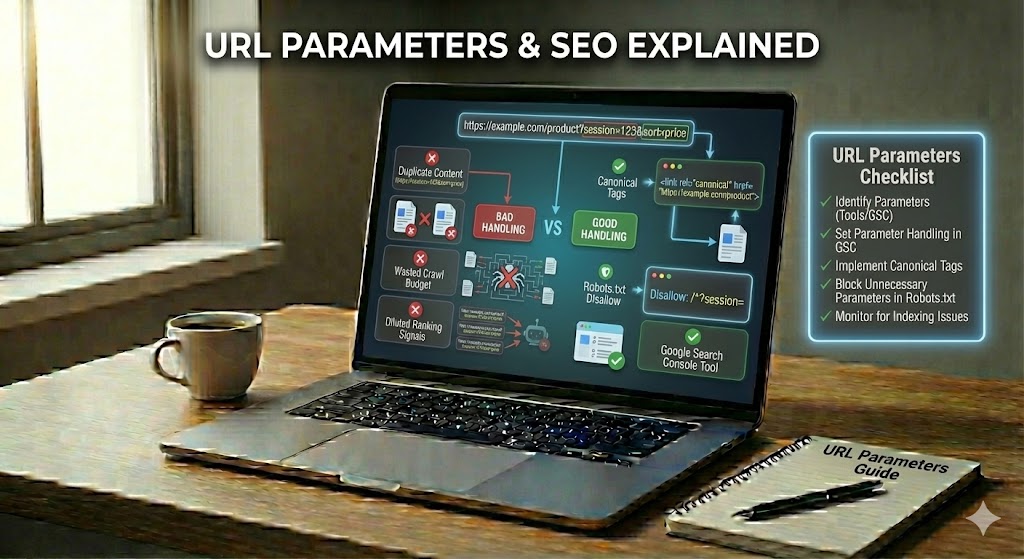
When you look at a web address in your browser, you may see a question mark and some extra text at the end. These extra parts are called URL parameters. They often look strange, but they help websites do things like sort products, track clicks, or show special versions of a page. Even though they seem small, these tiny pieces of text can have a big impact on how search engines see and rank your site.
In SEO, search engines must decide which pages to crawl, store, and show to users. Badly managed URL parameters can cause big problems, such as many pages with almost the same content, wasted crawl budget, and confusion about which page is the “main” one. On the other hand, well‑controlled parameters can support both users and search engines by keeping URLs organized and clear.
This article explains what URL parameters are, why websites use them, and how they affect SEO. You will also learn simple, beginner‑friendly ways to handle them safely, avoid common mistakes, and decide when parameters are okay and when they are risky for your site’s visibility in search results.
URL Parameters & SEO
Once you know what URL parameters are, the next step is understanding how they interact with search engines. Even small tweaks after a question mark can quietly influence how often your pages are crawled and which versions end up in the index.
This section looks at how these short text fragments affect search crawling, indexing, and ranking, setting the stage for the more detailed concepts covered later.
From a search engine’s view, each unique address can look like a separate page, even when the content is almost the same. This is where duplicate variants, tracking tags, and filter options begin to matter far more than most beginners expect. The same product list can suddenly exist under hundreds of slightly different links.
- Crawl efficiency: many parameter combinations can use up crawl budget without adding real value.
- Content signals: search engines may struggle to see which version is the main one.
- Link equity: links spread across many parameter URLs instead of one strong, clean page.
Introduction to URL Parameters & SEO
Before diving into specific use cases, it helps to look at URL parameters as a bridge between user experience and search visibility. The same features that make browsing smoother can, if unmanaged, blur signals for crawlers.
Here, the focus shifts from raw mechanics to how parameters can either support or disrupt a clear site structure in the eyes of search engines.
At a basic level, these extra pieces in a link can either clarify structure or create noise. When used with care, they help define versions of a page that are genuinely useful, such as a price‑sorted list or a pre‑filled search. When used without any rules, they can generate near‑duplicate pages at scale, hiding your strongest content behind countless minor variations.
In SEO work, this means you are not just looking at whether parameters exist, but what purpose they serve and how they are controlled. Clean setups guide crawlers toward your main URLs and keep ranking signals focused. Uncontrolled setups scatter those signals, leading to weak visibility and noisy index coverage, even when your content is actually good.
What Are URL Parameters?
To manage parameters confidently, you first need a clear picture of what they are on a technical level. Understanding their structure makes it easier to see why they multiply pages so quickly.
This section breaks down how parameters are formed in a URL and why their simple structure can have complex SEO effects.
Imagine giving a friend directions to a shop, then adding small notes like “use back door” or “ask for blue box.” URL parameters work like those extra notes added to a normal web address.
In simple terms, URL parameters are small key‑value pairs added after a question mark in a link. They help pass extra information to the server, often changing how a page looks or behaves without changing its main content.
They usually appear after the main path, separated by ? and joined with &. A very basic example looks like this:
https://example.com/shoes?color=red&size=42
- color=red is one parameter (key color, value red).
- size=42 is another parameter for shoe size.
Multiple parameters can stack up quickly, which is why they often create long, complex URLs that matter so much in URL Parameters & SEO decisions.
Why Websites Use URL Parameters
After seeing how parameters are structured, the natural question is why they are so common. The answer lies in the flexibility they offer for both users and site owners.
This part looks at the main jobs parameters perform on real sites, laying the groundwork for understanding the risks they can pose to SEO later on.
Think about the last time you searched for a product and changed the color, size, or price range. The page seemed the same, but the address changed slightly. Those small changes use URL parameters to control what you see without rebuilding the whole site.
Site owners rely on these extra pieces in a link to make pages more interactive, measurable, and flexible. Below are the most common, practical reasons they appear so often.
- Filtering content: show only red shoes, houses under $500k, or articles from this year.
- Sorting lists: order products by price, popularity, or newest first with a simple sort=price_asc type parameter.
- Tracking behavior: measure which email, ad, or banner brought a visit using special tracking parameters that do not change the page content.
- Session and state control: keep a user logged in, remember items in a cart, or store a simple theme=dark preference when other methods are not used.
Used with care, these functions help build fast, flexible experiences while still keeping the main content stable for search engines.
How URL Parameters Affect SEO
Once you know why parameters exist, it becomes easier to see how they can either help or harm your search performance. The same features that improve usability can also generate a flood of near‑identical URLs.
In this section, the focus is on the direct impact of parameters on duplicate content, crawl budget, and indexing, which are core to consistent rankings.
Click a filter a few times, and one product page can quietly turn into dozens of versions. This is where small changes in the address bar start to create big differences in SEO outcomes.
From a search engine’s side, each unique address can look like a separate page, even when the content barely changes. That is why these extra pieces in a link can help organize useful views or explode into hard‑to‑control variants.
In day‑to‑day SEO, they mainly influence three areas that matter a lot for visibility and stability in search:
- Duplicate content: many parameter versions can show almost the same text and products, which weakens the main page signal.
- Crawl budget waste: bots may spend time on endless parameter mixes instead of new or important pages.
- Indexing confusion: search engines can struggle to choose which version to store and rank, spreading link equity across too many URLs.
URL Parameters vs Clean URLs
After seeing how parameters affect crawling and indexing, it becomes clearer why many SEOs push for clean URLs. Both clean paths and parameterized links can show the same content, but they play different roles in a long‑term strategy.
This section contrasts these two approaches so you can decide which should act as your main, rankable versions.
Imagine you are telling a friend how to reach a page. Which is easier to read and remember: a short, simple link or a long string filled with question marks and equal signs? That difference sits at the heart of URL parameters & SEO decisions.
Clean URLs are short, descriptive paths without extra keys and values, such as https://example.com/shoes/red. Parameter URLs add details after a question mark, like https://example.com/shoes?color=red&sort=price_asc. Both can show the same content, but they send different signals to users and search engines.
For long‑term SEO stability, clean versions usually work better as the main, rankable pages. They are easier to crawl, share, and understand, and they keep link equity focused on one strong address. Parameter versions are safer when used for temporary states, such as sorting or tracking, and when kept under strict control instead of replacing your core, clean structure.
Handling URL Parameters & SEO for Beginners
Knowing the pros and cons of parameterized URLs is only useful if you can act on it. Even with limited technical background, you can set simple rules that prevent the worst issues.
This section offers straightforward, beginner‑friendly steps to keep URL parameters & SEO aligned without rebuilding your entire site.
Ever wished those long, messy links could be simpler without breaking your site? Learning a few basic rules lets you keep the helpful parts while avoiding the risky ones that confuse search engines.
Below are simple, safe steps any beginner can follow to keep URL parameters & SEO under control without deep technical skills.
Start by deciding which versions of a page should matter most in search. Keep one main, clean URL for important content, and treat extra parameter views as helpers, not heroes. When linking inside your site, always point to that main version so it collects most link equity and signals.
Next, give search engines clues about relationships between similar pages. Use a simple canonical tag on parameter pages that points back to the main one, so bots know which version is preferred. Also, avoid linking heavily to endless filter mixes; keep navigation focused on a few useful, stable combinations instead of every tiny variation.
- Limit how many filter and sort options can be combined at once.
- Block obviously useless URLs (such as empty searches) from being indexed.
- Document what each parameter does so future changes do not break your rules.
“The best parameter strategy is often less about clever tricks and more about clear, consistent choices.” — Marie Haynes
Common URL Parameter Mistakes and Related SEO Topics
Even with good intentions, parameter setups can drift into chaos over time. Recognizing the most frequent errors makes it easier to spot problems early in your own analytics and crawl reports.
This final main section highlights typical pitfalls and points you toward related technical SEO concepts that deepen your understanding of parameter control.
Ever seen a site where every tiny click makes a brand‑new, strange‑looking link? Behind that chaos, there are often the same simple errors that keep repeating. Understanding these mistakes helps you avoid hidden SEO damage before it grows too large to control.
Many teams focus on content and forget that messy parameter rules quietly change how that content is crawled and ranked. Below are frequent problems that appear on real sites and how they connect with other key technical SEO areas you may want to learn next.
Common beginner mistakes include:
- Letting endless filter mixes create infinite parameter URLs with almost no extra value.
- Using tracking tags in main navigation, so bots index many duplicate addresses like ?utm_source=.
- Skipping canonical tags on parameter pages, leaving search engines unsure which version to trust.
- Allowing search pages like ?q= to be indexed, creating low‑quality results in the search index.
- Blocking important parameter URLs with hard robots.txt rules instead of careful index control.
- Changing how parameters behave without updating your SEO settings or internal links.
- Using parameters for core page structure instead of stable, clean URLs for main categories and products.
These issues tie into several related topics worth exploring to build a stronger foundation:
- Crawl budget optimization
- Duplicate content management
- Canonicalization strategy
- Internal linking architecture
- Faceted navigation SEO
- Robots.txt and meta robots control
- Sitemap design for large sites
- Index coverage analysis in search consoles
Bringing URL Parameters & SEO Together
Bringing all these ideas together, URL parameters are small elements that can shape how effectively search engines access and evaluate your content. With clear rules and consistent choices, they become tools that support your main pages instead of competing with them.
By keeping a strong, clean main URL, using parameterized versions as helpers, and applying basics like smart internal linking and clear canonical signals, even beginners can align URL parameters & SEO in a way that preserves crawl budget and concentrates link equity where it matters most.