
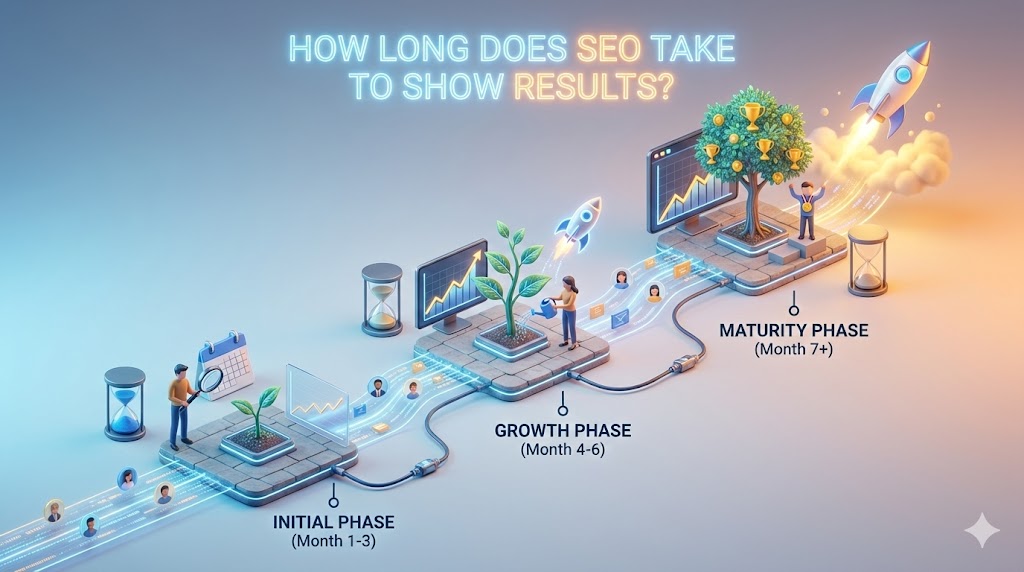
Many people want to know how long it takes for SEO to show real, measurable results. This question is common because business owners and beginners often hope for quick wins, but SEO does not work like paid ads where you can see clicks almost right away.
SEO is more like growing a tree than flipping a switch. Search engines use complex algorithms to study your pages, compare them with other sites, and decide where to place you in search results. This process takes time, testing, and many re-checks before strong rankings can appear and stabilize.
To work with SEO in a smart way, you must have realistic expectations. You should know that results depend on many things, such as competition, your current website health, and your content quality. When you understand these parts, you can plan better, avoid stress, and focus on steady, long-term growth instead of chasing fast but risky tricks.
How Long Does SEO Take to Show Results?
Before you commit time and budget to SEO, it helps to have a clear idea of the basic timeline. This section gives a simple, high-level answer so you know roughly when you might see movement.
Have you ever refreshed your reports again and again, hoping to see a jump in visitors the same week you changed a page? Many beginners feel this way right after they start working on search visibility.
In most cases, you can expect to see early signs of SEO movement in about 3 to 4 weeks, such as a few new keywords entering low positions. More noticeable growth, like stable rankings and clear traffic increases, usually needs about 3 to 6 months, while strong, dependable results often take 6 to 12 months or more, especially in competitive areas.
- Quicker shifts often appear on smaller pages with low competition.
- Slower progress is normal when your site is new, large, or has many technical issues.
Introduction: Why “How Long Does SEO Take to Show Results?” Matters
Knowing the rough timing is only the first step; understanding why it matters to your business decisions is just as important. This part explains how SEO timelines shape planning, patience, and how you judge success.
Imagine planning your budget, hiring writers, or paying a developer, but not knowing when you will see any return. That is exactly what happens when the timing of SEO results is unclear.
This question matters because it shapes goals, budgets, and patience. When leaders believe results should come in two weeks, they often quit too early, cut content, or jump between strategies. With a clear time frame, you can choose realistic milestones, like:
- Tracking small keyword gains instead of only big sales jumps
- Comparing performance month over month, not day by day
As marketing expert Rand Fishkin notes, “Consistent effort over time beats short bursts of frantic activity.” Knowing the usual timing helps you keep that effort steady and calm.
Short Answer: How Long Does SEO Take to Show Measurable Results?
Once you see why timelines matter, it helps to pin down what “measurable results” actually look like. Here you will find a concise breakdown of when different kinds of SEO signals commonly appear.
Think of your website like a new shop on a quiet street. People will not rush in on the first day, but with clear signs and good products, more visitors slowly start to come. SEO follows a similar pattern, moving from small signals to stronger, trusted rankings over time.
Most websites start to see measurable SEO signals such as new keyword positions and a gentle rise in organic clicks within about 4 to 6 weeks. More solid movement, like visible traffic growth and better average rankings, commonly appears across 3 to 6 months, while strong, dependable performance in competitive topics often needs 6 to 12 months or longer.
- Fast feedback usually happens when pages target very specific, low-competition searches.
- Slow but steady gains are normal for new domains, tough industries, or sites with many fixes to complete.
Why SEO Takes Time to Show Results
Knowing the numbers is helpful, but understanding the reasons behind them makes the wait easier to accept. This section looks at what search engines actually do before your pages can climb the results.
Waiting for search improvements can feel slow, but there are clear reasons behind this delay. Search engines must first learn to trust your pages before they send more visitors.
They use complex crawling and indexing processes to find, store, and test your content against many other sites. This includes checking relevance, quality, and user behavior over weeks or months, not days.
On top of that, competition, website age, content depth, and technical health all affect how quickly changes are rewarded. A well-built site in a low-competition topic can move faster, while a new or broken site in a busy niche almost always needs more time.
Typical SEO Timeline and What to Expect Over 12 Months
Once you understand why SEO is gradual, it helps to visualize how progress usually unfolds. Here is a simple year-long view so you can match your expectations to each phase of the journey.
It helps to think of the next year as a simple roadmap. Each group of months brings different types of changes, from tiny signals to stronger, more stable gains.
During the first 1–2 months, you mostly see setup work: audits, fixes, and new content. Small signs, like a few new keywords and better crawling, may appear, but traffic changes are usually light.
Across 3–6 months, pages often start rising into mid or higher positions. This is when you may notice clearer organic traffic growth, improved click‑through rate, and some early leads or sales from search.
- 6–12 months: stronger rankings on target topics
- More consistent organic visits and better conversion data
Key Factors That Affect How Fast SEO Results Appear
Not every site follows the same curve, even over a full year. In this part, you will see which core elements speed up or slow down your own path to measurable results.
Why do some sites climb in a few months while others stay stuck for a year? The timing is not random; several core elements quietly push you forward or hold you back.
Understanding these elements helps you predict your own pace and choose where to invest effort for the biggest impact on how quickly rankings and traffic can grow.
One major factor is competition in your niche. If many strong sites already cover your topics, search engines need more proof before they move you up. In easier spaces with weaker rivals, well‑optimized pages can earn spots faster because there are fewer serious players to beat.
Your domain age and history also shape speed. A trusted site with years of clean behavior often sees changes rewarded sooner than a brand‑new domain. Past problems, like spammy links or thin content, can slow everything down while search engines re‑evaluate your trustworthiness.
Another driver is content depth and on‑page optimization. Pages that clearly answer a searcher’s question, use simple structure, and include helpful details give algorithms strong signals. When many of your URLs meet this standard, each crawl gives more reasons to rank you higher.
Finally, technical health and backlinks influence how fast benefits show up. Clean code, quick loading, and mobile‑friendly layouts help bots crawl more efficiently, while relevant, high‑quality links act as votes of confidence. Together, they can turn slow progress into steady, visible momentum.
How Long Does SEO Take to Show Results on New vs Old Websites?
Even with the same tactics, two sites can experience very different speeds of improvement. This section compares how new and established domains typically move through the SEO timeline.
Two sites can publish the same great page on the same day and still see very different SEO speeds. The main reason is simple: search engines do not trust every domain at the same level from the start.
When you compare fresh projects with long-running sites, the path to measurable results often looks very different, even if the work quality is similar.
On a new website, Google must first test your pages, learn your topic, and watch user behavior, so strong growth may need 6–12 months or more. An older domain with a clean history can turn similar optimizations into visible gains within about 3–6 months, because it already has proven relevance and some backlinks.
- New sites: slower trust-building, but a chance to avoid old mistakes from day one.
- Established sites: faster feedback, yet sometimes blocked by legacy technical issues or weak past content.
What SEO Results Usually Look Like at Different Stages
Seeing the right signals at the right time helps you stay confident in your strategy. Here you will learn which signs to watch for in the early, middle, and later phases of your SEO work.
When you know what to look for at each moment, the waiting period feels less confusing. Instead of asking if SEO is “working at all,” you can watch for specific signs of progress that normally appear step by step.
Over time, improvements move from tiny changes in data to clear business impact. The pattern below shows how rankings, traffic, and conversions often grow together, even if they do not rise at the same speed.
In the early weeks, results are mostly hidden in tools: more pages indexed, a few new impressions, and first low‑position keywords. Later, you may notice:
- Mid‑stage signals like better average positions and steadier organic visits
- Late‑stage wins such as stronger lead volume and higher revenue from search
Common Misunderstandings About How Long SEO Takes
Misjudging the timeline can lead to poor decisions, even when your strategy is sound. In this section, you will see the most frequent myths that distort expectations and create unnecessary pressure.
When weeks pass without big traffic jumps, it is easy to blame the work or the agency instead of the timeline. Many delays come not from poor strategy but from false ideas about how quickly SEO should move.
Clearing up these myths helps you judge progress fairly and avoid risky shortcuts that promise speed but damage long-term results.
One widespread belief is that SEO should work in a few days, just like turning on ads. In reality, search engines must crawl, index, and test pages, so genuine ranking movement almost always takes longer than a week or two.
Another mistake is thinking that publishing one “perfect” page will instantly unlock top spots. Sustainable visibility usually comes from a group of related, high‑quality pages, not a single article.
There is also the idea that adding more keywords automatically speeds things up. Stuffing terms into titles and text often hurts relevance and user experience, which can slow or block ranking gains instead of helping.
Some owners assume that buying cheap backlinks guarantees fast results. These links may bring a quick spike, but they often break guidelines and can lead to manual actions or long‑term trust problems that take months to repair.
Finally, many believe that once you hit good positions, SEO work can stop. Because competitors keep improving and algorithms change, pausing all efforts usually leads to gradual declines over the following months rather than stable, lasting success.
Safe Ways to Speed Up How Long SEO Takes to Show Results
While you cannot force search engines to move instantly, you can remove many common delays. This part focuses on safe, proven steps that help your site earn trust and visibility as efficiently as possible.
Is there a way to move faster without breaking rules or risking penalties? Instead of hunting for secret tricks, you can focus on a few proven actions that help search engines understand and reward your work sooner.
The goal is not to force instant rankings, but to remove delays and send clear, strong relevance signals as early as possible. When basic obstacles disappear, normal SEO timing often shortens on its own.
Start by fixing obvious blockers like slow loading pages, broken links, and missing titles. Then publish a small set of well‑structured, helpful pages that target specific questions, and update them based on real search data.
- Improve technical health so crawling and indexing happen quickly.
- Create focused content clusters to build topical authority faster.
- Earn a few high‑quality, relevant backlinks instead of many weak ones.
Bringing It All Together: Planning for Realistic, Long-Term SEO Growth
All of these pieces point to the same core truth: SEO rewards steady, informed effort over time. When you align your expectations with how search engines work, the process becomes far less stressful and far more sustainable.
Understanding how long SEO takes to show results is really about learning how search engines build trust over time. Instead of expecting instant wins, you now know that clear timelines, steady work, and patient tracking are the keys to turning small signals into lasting visibility, traffic, and sales.
By watching the normal 3–12 month journey, checking the main factors that shape speed, and avoiding common myths and risky shortcuts, you can judge your progress fairly and adjust your plan without panic. Focus on helpful content, clean technical foundations, and honest optimization, and you give algorithms every reason to reward your site as they crawl, index, and re‑test your pages.
In the end, SEO behaves less like a one‑time switch and more like a system you keep improving. When you work with that system instead of fighting it, you can move beyond asking how long SEO takes and start focusing on the consistent steps that keep your search visibility growing over the long term.