
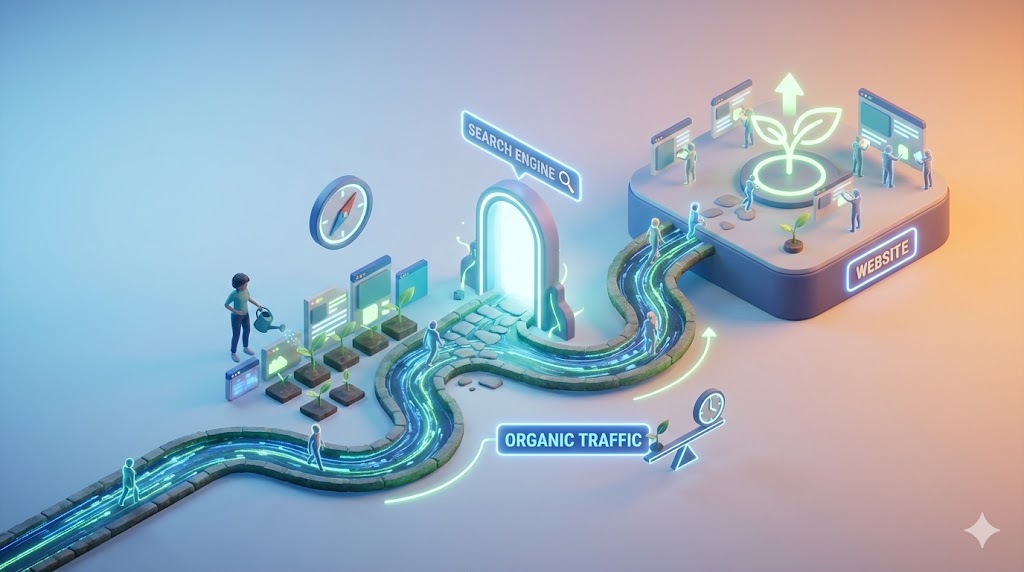
When people talk about website traffic, they are talking about how many visitors come to a website and how they get there. Just like cars use different roads to reach a city, visitors use different paths to reach a site, such as search engines, social media, or ads.
One very important type of website visitor is called organic traffic. These are people who find your website naturally, usually by typing a question or phrase into a search engine and then clicking a result that is not an ad. This happens because the search engine thinks your page is useful and relevant.
In this guide, you will learn what organic traffic is, how it works, and why it matters for any website. You will also see how organic traffic is different from paid traffic, the main benefits it can bring, and simple ideas to help you start growing organic traffic in a safe and steady way.
Organic Traffic Explained
Before you focus on numbers or tools, it helps to understand the basic idea behind organic visitors. This section walks through what makes this traffic different from other sources and why many sites quietly depend on it every day.
Imagine someone typing a question into a search box because they need help, not because an ad told them to click. That simple action is the start of a powerful, quiet flow of visitors many sites rely on every day. Understanding this flow helps you see why some pages keep getting visits long after any campaign has ended.
Organic traffic is the group of visitors who arrive at a website after using a search engine and clicking a result that is not marked as an advertisement. These clicks come from the search engine’s natural listings, which are ordered by relevance and quality, not by payment. In other words, the page earned its place instead of buying it.
Because these visits are based on what people are truly searching for, they often show strong intent. Someone who reaches a page this way is usually asking a clear question, comparing options, or looking for a solution, which makes organic visitors especially valuable over time.
Introduction to Website Visits and Organic Traffic
Once you know what organic traffic is, the next step is to see how it fits into the bigger picture of all your website visits. This section introduces the main traffic sources so you can understand where visitors come from and how organic clicks compare.
Have you ever wondered why some pages seem to get visitors every day, even when nobody is running ads for them? That steady stream of people does not appear by magic; it follows patterns you can understand and eventually guide.
To see those patterns clearly, it helps to think about every visit to a site as a tiny story. Each story starts with a person, a need, and a place where they first see a link. Some arrive from an email, others from a social post, and many from a search engine result they feel they can trust.
These different paths are called traffic sources. When a visitor comes through a link that was earned instead of paid for, such as a normal search result listing, that visit counts as organic traffic. Over weeks and months, this natural flow can turn into a reliable base of readers, customers, or students.
- Direct visits: people type your web address or use a bookmark.
- Referral visits: clicks from other sites, blogs, or forums.
- Social visits: traffic from social networks or community platforms.
- Organic visits: clicks from non‑advertising search results.
Many site owners slowly discover that organic visitors often stay longer, read more pages, and return more often. Because they arrived while actively searching, they bring a level of intent and curiosity that paid campaigns cannot always match.
What is Organic Traffic?
Now that you have seen where organic visits sit among other sources, it is easier to look more closely at this one type of traffic. This part gives a clear definition so you can recognize organic visitors in your own analytics and understand what makes them unique.
Picture someone quietly searching for help with a problem, clicking a result that looks honest and useful, and then reading without any ad pushing them. That simple moment online is where organic traffic starts to take shape as something you can measure and improve.
In simple terms, organic traffic is the number of visitors who reach your site from a search engine’s normal results, not from paid ads or special sponsored boxes. These results are called natural listings because the search engine ranks them using its own algorithm and rules, based on things like relevance, content quality, and user behavior.
Because these visits come from people who are already looking for answers, they often feel more natural and less forced. Over time, this kind of steady attention can turn helpful pages, guides, or tools into long‑lasting traffic magnets that keep working even when no advertising budget is active.
Organic Traffic Explained: How It Works Step by Step
With the definition in place, it helps to see what actually happens between a person’s question and their visit to your page. This section walks through the search journey in simple steps so you can understand the process behind every organic click.
Think about the last time you searched for help online and quietly chose a result that simply “felt right.” That small choice follows a surprisingly clear path you can learn to recognize and guide. Below is a simple, step‑by‑step look at how that journey unfolds.
First, a person feels a need or problem. They open a search engine and type a query, such as “how to fix slow Wi‑Fi” or “easy pasta recipe.” The search engine reads this text and tries to understand the search intent behind the words: Are they learning, comparing, or ready to act?
Next, the search engine scans its huge index of pages using complex algorithms. It scores many factors such as relevance, content quality, and page experience. Then it shows a results page where paid ads appear at the top or bottom, and below or beside them you see the natural listings that can earn you organic visits.
Finally, the user scans titles and descriptions, chooses a result that seems trustworthy, and clicks. If that listing is not marked as an ad, their visit is counted as organic traffic. Over many similar visits, this repeated process becomes a stable, long‑term source of new readers and customers.
Organic Traffic vs Paid Traffic
After understanding how organic visits happen, it is useful to compare them directly with traffic you can buy. This section sets organic traffic side by side with paid traffic so you can see how each one affects cost, speed, and long‑term results.
Two visitors can land on the same page, read the same words, and even buy the same product, yet their paths may be completely different. Understanding those paths helps you decide where to spend time and money.
In this part, you will see how organic traffic compares with paid traffic. Looking at both side by side makes it easier to plan a simple, balanced strategy.
Aspect
Organic Traffic
Paid Traffic
How visitors arrive
Click normal search results
Click ads placed by bidding or budget
Cost per visit
No direct fee per click
Pay for each click or view
Speed of results
Slow build, grows over months
Very fast while ads are running
How long it lasts
Can continue for years if content stays useful
Stops as soon as the budget or campaign ends
Trust level
Often seen as more natural and unbiased
Sometimes viewed as less neutral because it is paid
Together, these two sources can work like two engines: paid traffic brings quick tests and data, while organic growth builds long‑term visibility without needing constant ad spend.
Key Benefits of Organic Traffic Explained
Seeing the differences between organic and paid visits makes it easier to appreciate why many people invest in earning clicks. This section focuses on the main advantages of organic traffic so you can understand how it supports budgets, brands, and long‑term growth.
Why do so many site owners work patiently for visits they cannot simply buy? The answer lies in how earned visibility shapes trust, costs, and long‑term growth in ways ads alone rarely match.
This part looks at the main advantages you gain when more of your visitors arrive from normal search results. You will see how this steady flow supports your budget, your brand, and your decisions over time.
One major benefit is that organic visits do not charge you per click. You invest in better pages, not in a constant ad bill. Over months, a single helpful article can bring thousands of visits without any extra fee, turning content into a kind of long‑lasting asset instead of a short campaign.
Because there is no bidding war for every impression, this channel often becomes a more sustainable source of traffic. Many businesses use it as a stable base, then add paid campaigns only when they need quick tests or bursts of attention.
Another advantage is higher trust and credibility. People know that ads are placed with money, but normal listings are shown because the search engine judged them useful. This simple difference often makes natural results feel more neutral and reliable.
Visitors who arrive this way are also more likely to see your site as an authority on a topic. Over time, appearing often for related questions can slowly build a reputation that supports sales, sign‑ups, or any other goal you have.
A quieter but powerful benefit is the quality of intent. Many organic visitors are in the middle of a clear journey: they are learning, comparing, or getting ready to act. That focus helps them engage more deeply with guides, tools, or product pages.
This can lead to stronger engagement signals, such as longer reading time or more pages per visit. In many analytics reports, these patterns show that natural visitors are not just appearing; they are actually paying attention.
- Lower ongoing cost compared to pay‑per‑click ads.
- Stronger trust because results are earned, not bought.
- Better engagement from visitors with clear questions and needs.
- Long‑term value as useful pages keep attracting new people.
Real-Life Examples of Organic Traffic
Abstract definitions become much clearer when you see them in everyday situations. This section shares simple real‑life examples that show how ordinary searches quietly turn into organic visits.
Seeing real situations makes it easier to understand how people quietly arrive at a page without any ad pushing them. The short stories below show how everyday searches can turn into organic visits that help a site grow over time.
In each case, a person has a need, types a search, and clicks a normal result that the search engine chose because it seemed useful. None of these clicks are paid for directly, yet they can still lead to sales, sign‑ups, or repeat readers.
Imagine a home baker typing “how to bake soft chocolate chip cookies” into a search box. They scroll past the results marked as ads and choose a normal listing with a clear title and helpful description. When they land on that recipe page, their visit counts as organic traffic because it came from a non‑advertising search result.
Later, someone planning a trip searches for “3 day itinerary in Paris for families.” They pick a detailed guide that is not labeled as sponsored. Again, that click is an organic visit. If the guide is helpful, the same person might bookmark it, share it, or even sign up for a newsletter, all starting from one earned click.
Organic visits also matter for small local services. A parent might search “best math tutor near me” and tap a listing that shows honest reviews and clear contact details. As long as that listing is part of the normal search results, every new viewer from that search is another example of organic traffic supporting a local business without a pay‑per‑click ad.
Across these stories, one pattern stands out: the searcher is in control. They choose what to click, based on trust and relevance, and the pages that consistently meet their needs slowly become quiet, reliable magnets for new organic visitors.
How to Increase Organic Traffic for Your Website
Seeing how organic visits appear naturally leads to a practical question: how can you earn more of them? This section focuses on simple, beginner‑friendly steps that make your site clearer, more useful, and easier for search engines to understand.
Imagine your site as a small shop on a quiet street. To bring more people in, you do not shout; you make the window clearer, the door easy to open, and the sign easy to read. Growing organic traffic works in a similar, gentle way.
Your goal is to help search engines and real people quickly see what your pages are about and why they are useful. The steps below focus on simple actions you can understand, even if you are new to SEO.
First, make your pages easy to read. Use clear titles, short paragraphs, and simple words that match the questions people type. Include the main topic in your headings and in a short, honest description.
Second, answer real questions in depth. A page that fully explains one problem can send stronger signals than many shallow posts. Over time, helpful content becomes a quiet magnet for repeated visits.
- Use clear topics for each page instead of mixing many ideas.
- Improve loading speed so visitors do not leave too early.
- Make navigation simple with menus that are easy to follow.
- Earn links naturally by publishing resources others want to share.
As you keep improving clarity, usefulness, and basic structure, search engines can better understand your pages, and more people will find you through normal results without any ad spend.
Why Understanding Organic Traffic Gives You an Edge
All of these pieces come together to show why organic visitors matter so much for long‑term success. This final section brings the main ideas into a short, clear takeaway you can keep in mind as you improve your site.
Across this guide, you have seen organic traffic explained from the ground up: what it is, how it starts with a simple search, how it differs from paid clicks, and why it can become a steady, long‑term source of visitors for almost any site.
At its heart, organic traffic is about earning attention instead of buying it. When your pages clearly match real questions, offer honest help, and are easy to use, search engines are more likely to show them in their natural results. Over time, this can lower your costs, build trust, and bring in visitors who already have a clear need.
By focusing on clear topics, useful content, simple structure, and a better page experience, you build a site that both people and search engines can understand. With patience and steady improvements, organic traffic can become one of your most reliable and rewarding channels.