
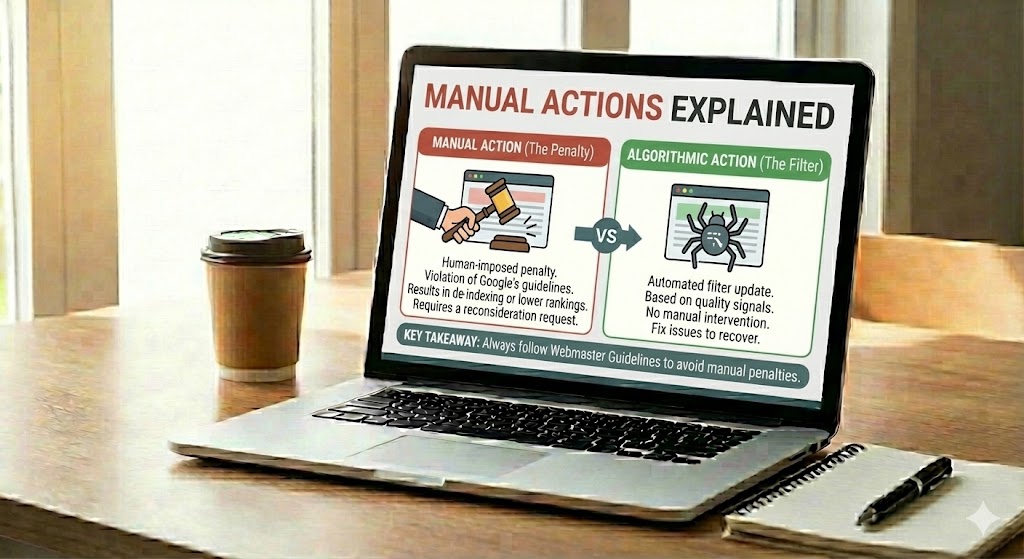
When a search engine gives your website a manual action, it means a real person has checked your site and decided that something on it breaks the rules. This is different from normal ranking changes, which are usually done by computer programs called algorithms. A manual action is like a warning note that says, “Something is wrong here, and it must be fixed.”
Manual actions are very serious for SEO because they can greatly reduce how often your pages show up in search results. In some cases, parts of your site, or even your whole site, can stop appearing for important searches. This means less organic traffic, fewer visitors, and less trust from users.
This guide will explain manual actions in simple steps, so even beginners can understand what they are, why they happen, how they hurt your website, and what you can do to fix them. By the end, you will know how to spot problems early, avoid risky tricks, and build a website that is safe, clear, and ready for long-term SEO success.
Manual Actions Explained
Before you can fix a manual action, you need to understand what it really means for your site. This section breaks down the basic idea behind these penalties, so you can see why they are different from everyday ranking changes.
Imagine playing a game where a referee can pause the match and give you a penalty for breaking the rules. A manual action works in a similar way: a human reviewer from the search engine steps in and decides your site has crossed a line.
Rather than letting the normal algorithm handle things on its own, this person makes a clear choice to limit how your pages appear. That means the problem is not a random change; it is a direct response to something risky or misleading on your website.
In simple terms, a manual action is a targeted punishment for behavior that looks like spam, trickery, or low quality. It can affect one page, a group of pages, or your whole domain, depending on how serious the issue is.
Because it is intentional and documented, this type of action sends a strong signal: you must fix the cause, prove you changed, and then ask for a review before normal visibility can return.
Manual Actions Explained: What They Are and Why They Matter
Once you know what a manual action is, the next step is understanding why it has such a big impact on your site. This section shows how a single decision by a reviewer can reshape your visibility, traffic, and reputation.
Have you ever seen a website suddenly lose most of its visitors, even though nothing on the page seemed to change? Often, the hidden cause is a manual action quietly limiting how that site appears in search results. Understanding this penalty helps you protect your own project before real damage happens.
A manual action is more than a simple warning. It is a formal decision by a human reviewer that your pages broke important rules, such as using spammy links or misleading content. Because it is recorded and specific, it usually affects rankings, traffic, and trust all at once, especially if the issue touches many URLs.
Instead of guessing, you can treat a manual action like a clear report that says what went wrong and where to start fixing it. When you read it carefully, you can:
- Spot the exact type of violation (for example, unnatural backlinks or thin content).
- Decide which pages need edits, removals, or stronger quality signals.
- Plan a clean-up that supports long‑term, safe SEO instead of quick tricks.
Manual Actions Explained vs Algorithm Updates
After seeing how powerful manual actions can be, it is important to tell them apart from normal ranking shifts. This section compares manual actions with algorithm updates so you can diagnose drops more accurately.
Have you ever wondered why some sites slowly move up and down in search, while others seem to drop overnight? These different patterns often come from two separate systems: manual actions and algorithm updates. Understanding how they differ helps you react calmly instead of guessing.
Algorithms are automatic rules written in code. They run all the time and use many ranking signals to decide which pages appear first. When an algorithm changes, the whole index can shuffle, even if no site broke any rules. This kind of change is usually broad, data‑driven, and not aimed at you personally.
A manual action, in contrast, is a specific punishment applied after a human review. Someone has checked your pages and decided that certain content or links look spammy or manipulative. The result is often sharper and more focused than an algorithm shift, such as one section of your site losing visibility while other parts stay normal.
To make the contrast clearer, think of the difference like this:
- Algorithm updates: ongoing, automatic, affect many sites at once, not tied to a single report or message.
- Manual actions: triggered by rule-breaking, documented in a clear notice, and only lifted after you fix issues and request a review.
Because of this, a sudden, targeted drop that comes with an official message is usually a sign of a manual action, while slower, widespread changes across many pages often point to normal algorithm updates.
Manual Actions Explained: Common Types You Should Know
Knowing that a manual action exists is only half the story; you also need to understand what kind of behavior triggered it. This section walks through the most common types of manual actions so you can match them to real issues on your site.
Have you heard people say their site was hit by a “penalty” but not explain what kind? Knowing the specific type of manual action is the first step to fixing it without guessing.
Below are several common reasons search engines take manual action. Each one targets a different kind of risky behavior, so understanding the differences helps you clean up problems faster and avoid them in the future.
Unnatural backlinks happen when a site gains links in a way that looks paid, traded, or automated instead of earned. For example, large networks of low‑quality blogs, paid sidebar links on many sites, or link exchanges created only to boost rankings can trigger this issue.
Another frequent problem is thin or copied content, where pages add little value or mostly repeat text from other sources. Doorway pages, auto‑generated articles, and posts stuffed with keywords but no real answers often fall into this category and can be manually demoted or removed from results.
Some websites misuse structured data by marking up content that does not exist, exaggerating reviews, or faking product information. When markup is misleading, rich results may be removed, and a manual action can limit how enhancements appear.
On forums, blogs, and comment sections, user‑generated spam is also a common trigger. Large amounts of junk comments, spammy profile links, or unrelated promotions left unchecked can make the whole site look unsafe, leading reviewers to apply a targeted manual action to these areas.
How Manual Actions Change Your SEO Results
Once a specific manual action is in place, its effects show up quickly in your metrics. This section explains how penalties reshape rankings, traffic, and indexing, so you can recognize the signs in your own reports.
Have you ever watched your traffic chart fall like a cliff instead of a gentle slide? That sharp drop is often how a manual action shows itself in your SEO data. Even if your pages look the same, the way search engines treat them can change overnight.
After a reviewer applies this kind of penalty, your site does not compete on equal terms anymore. Understanding how it reshapes rankings, clicks, and indexing helps you react faster and avoid bigger losses.
The most visible shift is in search rankings. Pages that once appeared on page one can suddenly move to page three or disappear for key queries. This loss of visibility is not random; it is a direct limit placed on how strong your pages can rank until the issue is fixed and reviewed.
That new ranking ceiling quickly affects organic traffic. Fewer impressions, lower positions, and reduced click‑through rates combine into a clear pattern: less search traffic, even if you keep publishing new content or improving design.
Beyond traffic, a serious manual action can change how your pages are indexed and displayed. In some cases, specific URLs are removed from the index; in others, rich results, stars, or special snippets stop appearing because your site is no longer trusted for those enhancements.
- Site‑wide actions can limit visibility across almost every page.
- Partial matches only hit certain sections, like a blog folder or forum area.
This loss of trust also weakens your wider SEO efforts. Even strong pages may struggle to perform while the penalty is active, so every new article or link you earn has less impact until you clean up problems and submit a successful reconsideration request.
Manual Actions Explained: Finding and Fixing Problems
Seeing the impact of a manual action can feel overwhelming, but the recovery process follows clear steps. This section focuses on how to identify the cause and carry out an organized clean‑up.
Have you ever felt lost when traffic drops and you are not sure where to start? This is where learning how to find and fix the exact cause of a manual action becomes your main task, not guessing or hoping it goes away on its own.
To move forward, you first need clear information. Log in to your search console and check the Manual Actions report. If there is a penalty, you will see the type of violation, which parts of your site are affected, and a short note explaining what the reviewers found.
Once you know the issue, create a simple plan. List all affected pages or links, decide whether to edit, remove, or disavow, and then work through them step by step. For example:
- Fix or delete pages with thin or copied content, and replace them with helpful, original text.
- Remove paid or spammy backlinks where possible, then use the disavow tool only for links you cannot control.
- Correct any misleading structured data so it matches the real on‑page content.
After cleaning up, document what you did: keep a short list of changes, dates, and examples. This record will help you write a clear reconsideration request and show reviewers that you now understand the rules and have taken real action to fix the problems.
Reconsideration Requests and Recovery After Manual Actions
Cleaning up the issues is only part of the journey; you also need to communicate those changes to the search engine. This section explains how to write a strong reconsideration request and what to expect during recovery.
When the penalty is in place and the clean‑up is done, the next step is asking for a second chance. This is where a reconsideration request becomes your main tool to reopen the door to normal search visibility.
Think of it like writing to the referee after a foul: you must show what went wrong, how you fixed it, and why it will not happen again. A short, honest explanation works far better than a long story with excuses.
A strong request usually covers three core points: admitting the violation, explaining the clean‑up work, and describing how you will avoid it in the future. You can include a simple list of actions, such as links removed, pages rewritten, or spam blocked.
- Be fully transparent about past risky tactics.
- Give clear examples of fixed pages or removed links.
- Describe new rules or tools you now use to stay safe.
Once you submit the request, recovery is not instant. Reviewers must check your changes, and they may still say no if the cleanup is incomplete or looks rushed. In that case, improve the site again and send another, more detailed request.
Staying Safe: Preventing Manual Actions and Common Myths
Recovering from a penalty is possible, but avoiding one in the first place saves time and stress. This section focuses on prevention and clears up common myths that often confuse beginners.
Have you ever wished you could avoid penalties before they even start? Staying away from risky tactics is much easier than fixing a damaged site later.
To reduce danger, focus on safe, long‑term SEO habits. Publish original, helpful content, earn links naturally, and keep your technical setup honest. Avoid buying links, auto‑generated articles, or hidden text, even if they promise fast results.
Simple routines also help: review new backlinks, moderate comments to block user‑generated spam, and check that your structured data matches what is really on the page. Over time, these habits build a trustworthy site profile that is far less likely to receive a manual action.
There are also many myths that confuse beginners. Common false ideas include:
- “All traffic drops mean a manual action.”
- “Using any SEO agency is unsafe.”
- “Disavowing links always boosts rankings.”
- “One copied sentence will trigger a penalty.”
- “You can pay to remove a manual action faster.”
- “More backlinks are always good, no matter the source.”
Building Long-Term SEO Trust by Understanding Manual Actions
Understanding manual actions gives you more control over your site’s future in search. Instead of fearing sudden penalties, you can recognize them, respond effectively, and build safer habits over time.
Manual actions are not random punishments; they are clear signals that something on your site crossed an important line. By now, you have seen how they differ from normal algorithm shifts, the main reasons they appear, and the specific ways they can limit your rankings, traffic, and visibility in search.
The key takeaway is that you are not powerless. When you know how to check for manual actions, trace the cause, and clean up risky tactics, you can turn a setback into a structured recovery plan, then focus on safe, user‑first SEO that supports stable, trustworthy search performance over time.