
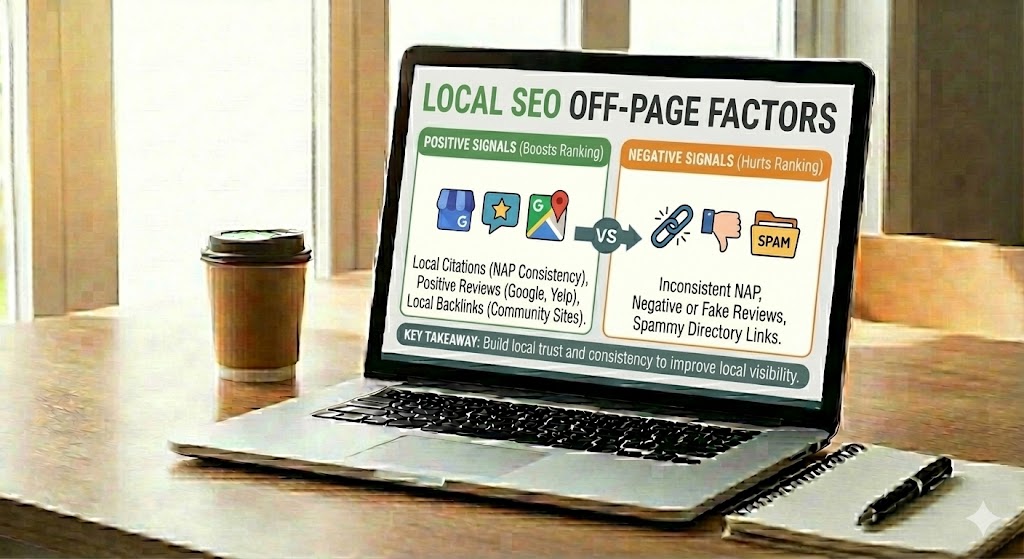
Local SEO helps people find nearby businesses when they search online for services or products in their area. Instead of showing results from all over the world, search engines try to show the most helpful options that are close to the user. This makes local SEO very important for shops, restaurants, service providers, and any business that serves a specific town, city, or neighborhood.
Many business owners focus on improving the content and structure of their own website, but fewer realize that off-page factors strongly affect local rankings. These are actions and signals that happen away from your site, such as local listings, reviews, and mentions of your business around the web. Search engines use these outside signals to measure trust, popularity, and local relevance, and then decide which businesses to show at the top of local results and map results.
By understanding key local SEO off-page factors, you can build a stronger online presence in your community. When reviews, citations, local links, and community activity all support each other, they send clear signals that your business is real, active, and important in your area, which can lead to more visibility and more local customers.
Local SEO Off-Page Factors
Before diving into specific platforms and tactics, it helps to see how all off-page elements fit together. Local search results often favor businesses that look trusted and active in the real world, even if their websites are simple. That is why strong off-page signals play such a central role in local SEO.
Have you ever wondered why some nearby shops appear first on maps, even when their websites are very simple? Often, the answer lies in strong off-page signals that prove the business is active and trusted in the real world, not just online. These outside signs help search engines feel confident about showing a business to people close by.
Among the most important local SEO off-page factors are accurate listings, steady reviews, and links or mentions from other local sites. Each of these works like a small vote that says, “Yes, this company really serves this area.” When those votes are clear and consistent, search engines can match local searchers with the right nearby options more easily.
- Google Business profiles that are complete and updated.
- Local citations with matching name, address, and phone.
- Online reviews that are recent, honest, and detailed.
Understanding Local SEO Off-Page Factors
Once you recognize the main types of off-page signals, the next step is understanding how they shape your overall reputation. Rather than acting alone, these elements combine to create a picture of your business that both people and search engines can trust. Thinking of them as a single system makes it easier to manage and improve them over time.
Think about how people in a town talk about a new shop that just opened. Their comments, stories, and recommendations all shape how others see that shop, even before anyone visits the website. Off-page signals on the internet work in a very similar way for a local company.
In local search, off-page factors describe what other websites, platforms, and users say about a business. These outside signals help confirm that a company actually serves a specific area, treats customers well, and is still open and active. When these signs line up, search engines can trust that listing more.
Key local SEO off-page factors include business profiles on major platforms, local directory entries, customer feedback, and links or mentions from nearby organizations. Together, they form a kind of digital reputation. The stronger and more consistent this reputation becomes, the easier it is to appear for local searches from people who are ready to visit or call.
Google Business Profile and Core Off-Page Signals
At the center of most local search strategies sits your main business profile on Google. This listing often acts as the first impression for nearby customers and as a major reference point for search engines. When combined with other off-page signals, it can greatly increase your chances of appearing in map packs.
Imagine a digital sign hanging over your shop door that shows up every time someone nearby searches for what you offer. For many local companies, that sign is their Google Business profile, backed by other key signals that prove the business is real and active. Together, these off-page elements shape how often you appear in map packs and local search results.
This profile works best when it is supported by strong core off-page signals: accurate contact details across the web, regular customer feedback, and mentions from trusted local sites. When those pieces match and stay up to date, search engines can confidently show your business to people close by who are ready to visit or call.
A well-managed profile sends several clear messages at once: what you do, where you are, when you are open, and how people feel about your service. These details may look simple, but they act as powerful proof that your business is active in the community and worth showing ahead of less complete listings.
Local Citations and NAP Consistency
Beyond your Google Business profile, many other websites repeat your business details. These scattered references either support or weaken the signals coming from your main listing. Keeping them aligned is essential for building a foundation that other off-page factors can reinforce.
When someone looks up your company on different websites and finds slightly different details each time, it creates doubt. Search engines notice this confusion too, which can quietly weaken your local visibility over time.
Local citations are any online mentions of your business name, address, and phone number (NAP) on directories, maps, social profiles, and local listings. These entries act like small records that confirm where you are and how people can contact you. The more accurate and consistent they are, the easier it is for search engines to trust your location.
NAP consistency means your business details match across all of these places: same spelling, same formatting, and the same main phone number. Even small changes, such as “Street” vs. “St.” or using a different phone line, can create tiny mismatches. Over many listings, these small gaps can add up to weaker local ranking signals.
To keep things clear, many businesses create a simple checklist of their exact official name, address, and phone and use it whenever they add or edit a listing. Helpful places to review include:
- Major map and directory sites that list local companies.
- Industry-specific platforms for your trade or profession.
- Local business associations and community websites.
This steady clean-up work may not feel exciting, but it forms a base for all other Local SEO Off-Page Factors. With strong citations and precise NAP details, your other efforts—reviews, links, and community mentions—can send a clear, unified signal about who you are and where you serve.
Reviews, Ratings, and Reputation as Off-Page Factors
Once your basic listings are accurate, public feedback becomes the next major layer of your off-page presence. What customers say about you in reviews can strongly influence both search engines and potential visitors. Treating this feedback as an ongoing conversation helps strengthen your overall reputation.
When people are unsure which nearby business to choose, they often read what others say first. These shared experiences become public proof of how a company treats its customers and how reliable it is in everyday situations.
In local search, reviews, star ratings, and overall reputation act as strong outside signals that help search engines judge quality. They do not just show how many customers you have served, but also how well you responded when things went right or wrong.
Digital feedback works like word-of-mouth on the street. A steady flow of recent, detailed, and balanced reviews tells search engines that your business is active and still serving the local community today, not just years ago.
- High average ratings suggest reliable service and can increase click-through from map results.
- Written comments with local details reinforce what you offer and where you operate.
- Owner replies to both praise and complaints show ongoing care and help build trust.
Over time, this public record forms a visible online reputation. When it is strong and consistently updated, it can support better local visibility, more map impressions, and more people choosing your listing over similar options nearby.
Local Backlinks, Brand Mentions, and Community Signals
Beyond profiles and reviews, connections with other local organizations deepen your presence in the area you serve. These relationships often show up online as links, mentions, and coverage on nearby sites. Together, they highlight that your business is part of the local community, not just another name in a directory.
When many people in the same town keep hearing about a company, it starts to feel familiar and trusted, even if they have not visited yet. The web version of this local buzz comes from nearby websites that link to you, talk about your brand, and show you are involved in real community activity. These outside signals deepen your local SEO off-page factors beyond listings and reviews.
Local links, mentions, and community proof all help search engines see you as part of the area’s daily life, not just another name in a directory. By building this kind of presence with care, you can stand out from competitors who only focus on their own site.
Local backlinks are links from websites that serve the same city or region, such as neighborhood blogs, local news portals, or nearby partners. A small number of relevant, locally focused links can be more helpful than many random links from faraway sites because they prove you are truly tied to that location.
Search engines treat these links as votes of confidence from within the community. A brief feature on a city blog, a sponsor logo on a school event page, or a partner link from another local business each sends a clear signal that you are active and known in the area you serve.
- Neighborhood blogs and news sites that talk about your services or events.
- Local partner pages that list you as a trusted vendor or collaborator.
- Community guides that include your website as a recommended option.
Beyond clickable links, brand mentions also matter. When your business name appears on local forums, calendars, or association pages, it can still support local trust, even if there is no direct link. These unlinked mentions help connect your brand to topics, streets, and neighborhoods that match your real-world footprint.
Community signals go one step further by showing that you are present offline as well as online. Sponsoring a youth team, taking part in a town fair, or giving a short talk at a local group can often lead to online coverage with both mentions and links, strengthening your overall reputation in the area.
Social Presence and Its Role in Local SEO Off-Page Factors
Social platforms add another layer to your local visibility by keeping your brand in front of nearby audiences day to day. While they may not replace core listings or reviews, they can reinforce the sense that your business is active and reachable. Simple, consistent activity is often enough to support your other off-page work.
People often discover nearby companies while scrolling through feeds long before they search on a map. This everyday activity does not replace search engines, but it quietly shapes which names feel familiar and trustworthy when someone is finally ready to look for a service.
In this part, we will see how a steady, simple social activity can support your Local SEO Off-Page Factors without needing complex campaigns or big budgets.
A basic, active profile on major social platforms works like a public noticeboard. Regular posts about opening hours, offers, or local tips show that your company is alive, reachable, and serving the area right now. Check that your name, address, and phone match your other listings so every profile repeats the same clear signal about who you are and where you operate.
Social actions can also create helpful side effects for search. When people share your posts, tag your location, or mention your brand, they often generate extra local mentions, profile visits, and website clicks. Over time, this wider attention can lead to more local backlinks, reviews, and brand searches, which are stronger off-page signals than social activity alone.
- Short local updates about events, weather issues, or service changes.
- Customer spotlights that thank real visitors from nearby streets.
- Location tags that clearly show the city, neighborhood, or area you serve.
Common Local SEO Off-Page Mistakes to Avoid
As you build out profiles, citations, reviews, and social activity, it is easy to overlook small details that slowly undermine your efforts. Spotting these issues early keeps your signals clear and prevents confusion for both search engines and customers. A few common pitfalls show up again and again for local businesses of all sizes.
Have you ever updated one profile online and then forgotten about the rest? Small gaps like this often grow into bigger problems that quietly hold back your local visibility.
This part looks at frequent errors that weaken Local SEO Off-Page Factors. By spotting them early, you can fix issues before they start to hurt map rankings and local trust.
Many problems come from rushing, guessing, or trying to “set and forget” your online presence. Paying attention to the details below helps protect your local reputation signals over time.
- Inconsistent NAP data across directories, social pages, and maps.
- Incomplete business profiles with missing hours, categories, or services.
- Ignoring reviews, especially complaints, instead of replying calmly.
- Buying fake reviews, which can break platform rules and damage trust.
- Low-quality local backlinks from spammy or unrelated sites.
- Outdated citations after a move, rebrand, or phone number change.
- Weak social activity that gives no clear sign you still serve the area.
As search expert Bill Slawski often noted, clear, consistent signals usually win over tricks or shortcuts. Avoiding these mistakes keeps your off-page work simple, stable, and easier to grow.
Bringing Your Local Off-Page Signals Together
All of these off-page elements ultimately work best when they support one another. Instead of treating profiles, citations, reviews, links, and social posts as separate tasks, view them as parts of a single local strategy. This joined-up approach creates a clearer picture for both customers and search engines.
Strong Local SEO Off-Page Factors work like a clear, steady voice that tells search engines and nearby customers who you are, where you are, and why you can be trusted. When your profiles, citations, reviews, links, and social activity all point in the same direction, they form a powerful web of local trust signals around your business.
The goal is not to chase every new trick, but to build a reliable, easy-to-check presence across the platforms and places that matter most in your area. By avoiding common mistakes, keeping your information accurate, and staying active in your community, you create a long-lasting advantage that is hard for less organized competitors to copy.
Over time, these efforts turn into a connected digital ecosystem that supports better rankings, more map views, and more real visits or calls. Focus on being clear, consistent, and genuinely helpful to local people so your Local SEO Off-Page Factors naturally reflect the value you already provide offline.