
When people talk about SEO, they often speak about links, rankings, and traffic, but they rarely explain how fast those links should grow. This is where link velocity comes in. It is all about the speed at which your website gains or loses backlinks over time, like how quickly new roads are built that lead visitors to your site.
Search engines watch this speed very closely. A steady, natural increase in backlinks can act as a signal that people truly like and trust your content. On the other hand, a sudden, unnatural jump in links can look suspicious, almost like someone is trying to cheat the system.
For beginner‑friendly SEO, it is important to understand that link velocity is not about building links as fast as possible. Instead, it is about healthy, believable growth that matches your website’s size, age, and popularity. By learning how link velocity works, you can avoid risky tactics, focus on safe strategies, and help your site grow in a way that search engines are more likely to respect and reward.
Link Velocity Explained
Before diving into tactics, it helps to clearly define what link velocity actually is. This section breaks down the concept in simple terms so you can recognize natural growth and spot patterns that look fake or forced.
Have you ever seen a small YouTube channel suddenly go viral and gain thousands of followers in a week? Something similar can happen with backlinks, and that sudden change is closely related to link velocity. Understanding this idea helps you see why some growth looks safe, while other growth can look fake.
Link velocity simply means the rate at which new backlinks appear or disappear over days, weeks, or months. Search engines compare this pace to your site’s history, size, and overall popularity to judge whether the pattern looks natural or manipulated.
In practice, a healthy link velocity often shows as slow, steady increases that match your content output and promotion. By contrast, a sudden burst of hundreds of low‑quality links, especially to a small or quiet site, can act as a warning sign of spammy tactics and may hurt long‑term visibility.
Introduction to Link Velocity Explained
Once you know the basic definition, it helps to picture link velocity in everyday terms. Thinking of your website like a growing place people travel to makes it easier to understand how link patterns should evolve over time.
Imagine your site as a small town slowly turning into a busy city. New roads, bridges, and paths do not appear all at once; they grow over time as more people want to visit. Link velocity explained in simple terms is about how quickly those digital “roads” from other sites start pointing to you and how that pace changes as your presence grows.
Rather than chasing the fastest growth possible, beginners should focus on steady, believable patterns of backlinks that match how much content they publish and how actively they promote it. When this pace feels natural, search engines are more likely to see it as real interest from real people rather than forced activity. Over time, understanding link velocity trends helps you plan safer campaigns, avoid sudden risky spikes, and support a more stable path to higher visibility in search results.
What Is Link Velocity?
With the concept introduced, the next step is to look more closely at how link velocity behaves over time. This section uses simple comparisons to show why the speed of change in your backlinks matters as much as the total number.
Have you ever tried to fill a bucket with water and noticed the difference between a slow, steady stream and turning the tap on full blast? The way water flows into the bucket is a simple way to picture how links can flow into a website over time.
Link velocity is the speed at which a site gains or loses backlinks during a specific period, such as a week or a month. Instead of only counting how many links you have, search engines look at how quickly that number changes and whether the pattern fits your site’s normal growth.
This idea works a bit like tracking a heart rate. A calm, regular rhythm suggests steady, natural interest in your content, while a sudden jump or sharp drop can look unusual. By watching these changes, you can better understand if your link‑building efforts appear natural, too aggressive, or possibly even harmful in the eyes of modern search engine algorithms.
Link Velocity Explained: Why It Matters for SEO
Knowing what link velocity is only becomes useful when you see how it affects rankings. Here, the focus shifts to why search engines care so much about the pace of your backlinks and how that influences long‑term results.
Have you ever wondered why some pages slowly climb the rankings while others jump up and then quickly disappear? That change over time is often linked to how quickly new links appear, not just how many there are.
Link velocity explained in this context is crucial because search engines treat it like a behavior pattern. A site that picks up links at a consistent, believable pace tends to look trustworthy, while a sudden surge of links from weak sites can look like manipulation and trigger closer review.
Understanding this helps you focus on safe, long‑term tactics: publishing helpful content, promoting it regularly, and allowing mentions to grow at a pace that fits your site’s age and visibility. When your link growth rhythm matches your overall activity, it supports stable rankings instead of risky, short‑lived spikes.
Natural vs Unnatural Link Velocity Explained
To keep your SEO safe, it helps to recognize what normal growth looks like versus patterns that raise red flags. This part compares natural and unnatural link velocity so you can quickly tell which side your site is closer to.
Think about how friendships grow. Some build slowly over months, while others feel forced and fade quickly. Backlinks can follow these same patterns, and search engines notice the difference.
In this part, you will see how natural link velocity looks compared to unnatural link velocity, and why this difference matters for safe, beginner‑friendly SEO.
Natural link velocity usually appears when people discover and share your pages at a pace that matches your publishing and promotion. You might:
- Post a new article and gain a few backlinks over several weeks.
- Run a small campaign and see a short, modest jump in mentions.
- Watch older, helpful pages collect links slowly over months or years.
By contrast, unnatural link velocity often shows up as sudden, sharp spikes or drops that do not match your normal activity. For example, a brand‑new site getting hundreds of links overnight from weak, unrelated pages can look like manipulated link building rather than honest interest.
“Search engines reward patterns that resemble real human behavior, not mechanical link bursts.” – Bill Slawski
When your growth pattern looks believable, you build trust and stability. When it looks forced, you increase the risk of spam signals and possible long‑term damage to your visibility.
Good vs Bad Link Velocity Patterns
After understanding natural versus unnatural behavior, it becomes easier to judge specific patterns. This section shows what good and bad link velocity look like in real‑world situations so you can adjust your strategy early.
Have you ever seen a small blog suddenly get mentioned everywhere in just a few days? Sometimes that kind of attention is real, and sometimes it looks forced. To stay safe, it helps to know how good link velocity patterns differ from bad, risky ones.
In simple terms, you are looking for steady, believable growth instead of wild jumps that do not match your normal activity. This section shows what those patterns look like so you can spot danger early and keep your SEO on a healthy path.
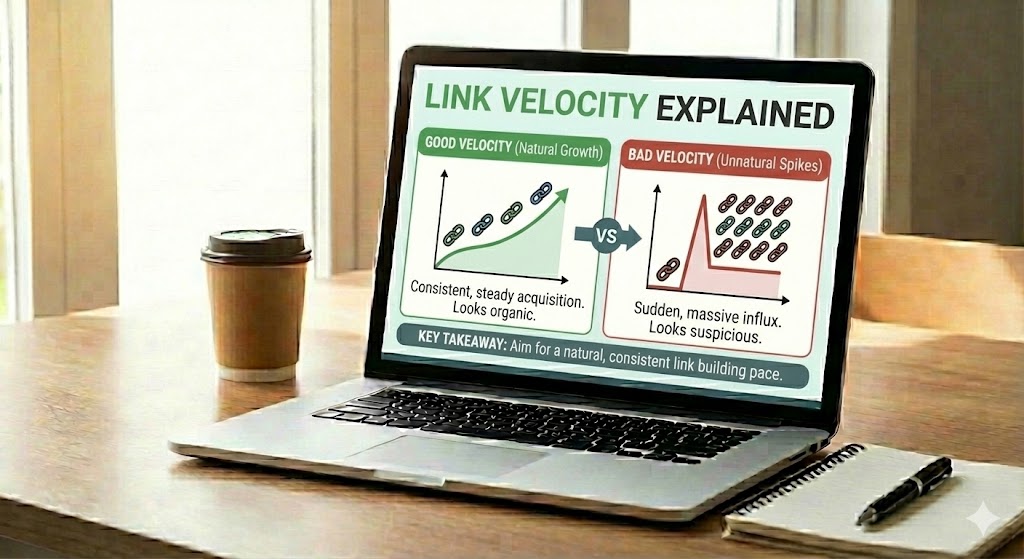
Healthy patterns usually match your content publishing and promotion pace. For example, if you post one helpful article each week and share it, you might see a few backlinks appear now, a few more next month, and some slow growth over the year. The line on a chart would look like a gentle slope, with small bumps when you launch a campaign or publish something special.
By contrast, bad patterns often look like a sharp spike followed by silence. A new site getting hundreds of links overnight from unrelated, low‑quality pages, then nothing for weeks, can send spam signals. Search engines may treat that as a sign of paid links, automated tools, or other manipulative tactics.
- Good pattern: Gradual increases linked to real events, like new posts, PR, or steady marketing.
- Bad pattern: Sudden floods of similar links, no clear reason, from weak or off‑topic sites.
- Good pattern: Some links gained, some lost, but overall slow upward trend.
- Bad pattern: Big bursts, then long flat periods, repeated again and again.
Real‑world examples make this clearer. A local bakery that blogs, shares recipes, and joins community events might gain a handful of links each month from blogs, news sites, and partners. That is a natural link velocity pattern. A thin affiliate site buying 1,000 sidebar links in a week creates a pattern that looks mechanical and risky.
“Search engines prefer growth that looks like human attention, not like a switch being turned on and off.” – Marie Haynes
Factors That Influence Link Velocity Explained
Not every site is expected to grow at the same pace. Here you will see which real‑world elements shape your link velocity so you can set realistic expectations for your own project.
Why do some sites gain links slowly for months, while others suddenly speed up without looking spammy? The answer lies in several real‑world factors that shape how fast new mentions appear and disappear.
Understanding these factors helps you aim for realistic, natural growth instead of chasing dangerous shortcuts. It also explains why two sites in the same niche can show very different link velocity patterns and still look normal to search engines.
First, content quality and usefulness matter a lot. Clear guides, unique data, and helpful tools give people a strong reason to link, often creating slow but reliable growth as more visitors discover and share your pages over time.
Next, your marketing and outreach activity affects how quickly links appear. Regular email outreach, PR, and social sharing usually create gentle waves of backlinks, while one‑off, aggressive campaigns can cause short, sharp bursts that look less organic.
The age and size of your website also play a role. A small, new site gaining 20 links a month can look busy, while the same number is tiny for a big, well‑known platform that already has thousands of pages and a long history.
Finally, overall brand awareness and popularity shape expectations. Well‑known names can suddenly earn hundreds of natural links from news coverage or viral content, whereas an unknown project showing the same spike might trigger closer algorithmic review.
Link Velocity Explained: Common Mistakes and Myths
Even with the right knowledge, it is easy to fall for bad advice about how fast to build links. This section clears up frequent mistakes and myths so you can protect your site while still growing your backlink profile.
Ever heard advice like “just build links faster and you’ll rank”? Many beginners follow tips like this without knowing they can quietly harm a site. Understanding the most frequent errors and myths helps you avoid trouble while still growing your visibility.
Instead of chasing shortcuts, it is safer to spot patterns that look fake to search engines. The points below highlight risky habits and false beliefs that often lead to harsh penalties or wasted effort.
Common mistakes beginners make include:
- Buying large batches of backlinks in a short time.
- Using the same anchor text again and again.
- Pointing links from low‑quality, unrelated sites.
- Running one huge campaign, then stopping all promotion.
- Ignoring backlink loss and sudden drops in referring domains.
- Copying a competitor’s pace without matching their authority.
- Tracking only link counts, not overall traffic or engagement.
Typical myths about link velocity explained:
- “More links per day is always better.”
- “Google has a fixed safe number of links per month.”
- “Any spike means an automatic penalty.”
- “Old domains can never be penalized for fast growth.”
- “Losing links means your SEO is doomed.”
- “You must manually control every new backlink.”
Building Safe, Steady Link Growth for Long‑Term SEO
All of these ideas come together when you plan how your site should grow over months and years. By treating link velocity as a simple health check, you can support strong rankings without relying on risky shortcuts.
Understanding link velocity explained gives you a simple way to judge whether your backlink growth looks natural, steady, and trustworthy or rushed and risky. Instead of chasing the fastest wins, you now know that the pattern and pace of links over time matter just as much as the raw number.
By watching how quickly links appear and disappear, you can avoid unnatural spikes, spot warning signs of spam, and aim for growth that matches your site’s age, size, and real activity. This supports more stable visibility in modern search engine results and reduces the chance of triggering filters or penalties.
As you keep learning SEO, treat link velocity like a health check for your backlink profile: publish useful content, promote it consistently, and let links grow at a believable speed. When your link rhythm reflects real interest from real people, you build a solid base for long‑term rankings and sustainable traffic.