
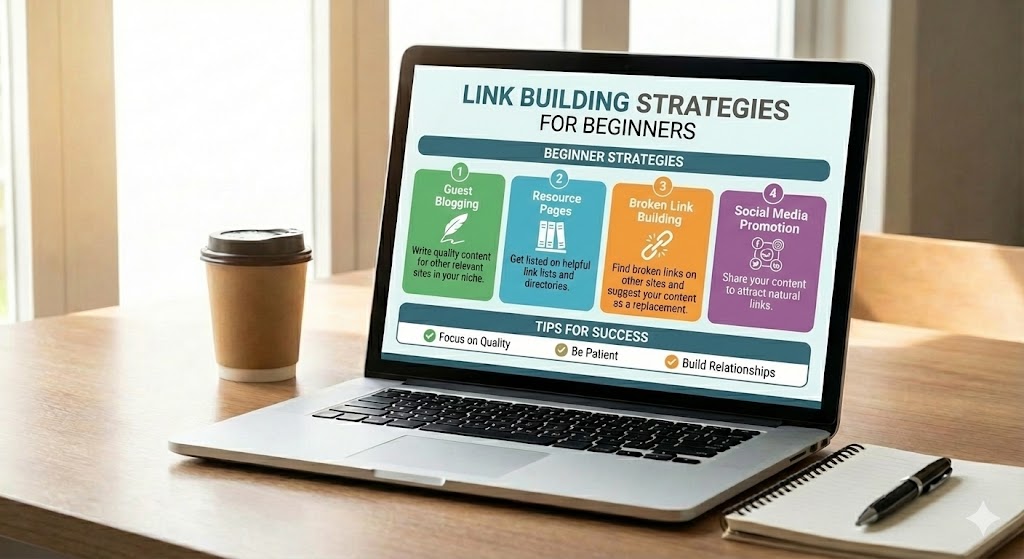
Link building is the process of getting other websites to point to your site using clickable text called links. These links are also known as backlinks. When a page links to you, it is like a small vote that says, “This website is useful.” Search engines use these votes to help decide which pages to show first in the results.
For beginners, it is very important to follow safe and honest link building strategies. Using tricks or buying low-quality links can look unnatural to search engines and may lead to problems or even penalties. Instead, you should learn how to earn links in a clean way that follows search engine guidelines.
This introduction will help you understand what link building is, why it matters, and which simple, beginner-friendly methods you can use without risk. You will learn how to focus on quality over quantity, build links slowly, and avoid common mistakes that many new website owners make when they first start with search engine optimization.
Link Building Strategies for Beginners
Getting started with link building strategies for beginners can feel confusing, but the basics are easier than they seem. A few focused actions, repeated over time, can help you attract steady, trustworthy links. This section turns those ideas into clear first steps.
Have you ever wondered why some sites seem to “attract” links while others stay invisible? The answer is a mix of simple, repeatable actions that even a new site owner can follow. In this part, you will see how to turn basic SEO ideas into clear steps you can use.
As you read, focus on safe, steady methods that build trust over time instead of quick tricks. These beginner actions help you grow a natural backlink profile that search engines see as honest and useful.
- Create helpful content: write clear guides, FAQs, and checklists that solve real problems, so people want to reference them.
- Improve internal links: connect your own pages so visitors and search engines can find your best articles easily.
- Use simple outreach: offer short guest posts, share your site on business profiles, and suggest your content for relevant resource pages.
- Watch for broken links: kindly tell site owners when a link is dead and offer your useful page as a replacement.
Introduction to Link Building Strategies for Beginners
Before diving deeper into tactics, it helps to see how link building fits into the bigger picture of your online presence. Links do not exist in isolation; they connect to your content, your outreach, and how people respond to your brand. This section gives you that wider view.
Imagine you just opened a small shop on a quiet street. If no one points people toward your door, it stays empty. Online, links act like clear road signs that help visitors and search engines find you.
In this part, you will learn how to choose simple, safe actions that slowly grow your site’s trust. Instead of chasing every possible tactic, you will see how to build a basic plan you can follow week after week.
To begin, think about three pillars: what you publish, where you show it, and how others react. When these work together, links begin to appear more naturally, and your off-page signals look clean and honest to search engines.
What Is Link Building and How Does It Work?
Understanding how link building works makes it easier to choose the right strategies. Links are more than just blue text; they carry signals that search engines use to judge your site. In this section, you will see what happens each time a backlink points to your pages.
Have you ever clicked a piece of blue text on one page and suddenly opened a totally different site? That simple action is the heart of how links work and why they matter so much in search.
At a basic level, link building means getting other websites to place clickable text that points to your pages. Each of these backlinks works like a small signal that your content has some value, trust, or relevance in a certain topic area.
Behind the scenes, search engines send out crawlers that move from page to page by following these links. As they move, they collect data about which sites link to you, how often they do it, and what words they use in the link text. Over time, this pattern helps search engines guess how authoritative and useful your site is compared with others.
- More high‑quality backlinks usually suggest stronger trust.
- Relevant links from your topic area help confirm what your site is about.
- Natural link growth over months looks safer than sudden spikes.
Why Link Building Is Important for SEO
Once you know what links are and how they work, the next step is seeing why they matter so much for visibility. Strong backlinks can boost your authority, improve rankings, and send more people to your pages. This section explains those benefits in simple terms.
Think of every link to your site as a small signal that says, “this page is worth a look.” When many trusted pages send these signals, search engines start to see your site as a stronger choice to show in results.
This part explains how good backlinks help your pages grow in power, rank higher, and appear in front of more people who are searching for what you offer.
First, links can raise your site’s authority. When respected websites in your topic area point to you, they pass some of their strength, often called link equity, to your pages. Over time, this makes your content look more reliable and important in your niche.
Next, backlinks support better rankings. Search engines mix many signals, but links are still one of the clearest ways to judge which pages deserve top spots. If two pages are similar, the one with more relevant, high‑quality links usually has a better chance to appear higher.
- Higher authority: trusted sites linking to you make your pages look more expert.
- Better rankings: strong backlinks help your content compete for tougher keywords.
- More visibility: links bring both direct visitors and more search traffic over time.
Good links also create extra paths for visitors. Someone reading a helpful article on another site can click and land on your page, even if they never searched your name. This mix of direct clicks and improved positions in search is why link building strategies for beginners matter so much for long‑term growth.
Safe Link Building vs Risky Link Buying
Not all backlinks are equal, and the way you get them matters just as much as the number you collect. Some tactics build long-term trust, while others can quietly damage your site. This section draws a clear line between safe link building and dangerous shortcuts.
Have you ever seen an offer that promises “hundreds of backlinks overnight”? It can sound tempting, especially when you are new and want faster results. But there is a big difference between earning links safely and buying them in a risky way.
Safe methods focus on value, trust, and relevance. You create helpful pages, improve your site, and reach out politely to people who might truly benefit from your content. Any backlink you gain this way is a natural vote that search engines are more likely to trust.
Risky link buying, on the other hand, usually means paying for unnatural, low‑quality links that exist only to trick algorithms. These often come from spammy sites, link farms, or networks that only sell “SEO packages.” If search engines detect them, you may face:
- Manual actions that push your pages down in results.
- Lost trust signals when fake links are ignored or removed.
- Wasted money and time fixing problems instead of growing.
A simple rule for beginners is this: if a link would not make sense without search engines (no real visitors, no real value), it is probably too risky to buy.
Beginner-Friendly Link Building Strategies
After understanding what to avoid, it is easier to focus on actions that are both safe and effective. Beginner-friendly tactics rely on usefulness, relevance, and polite outreach rather than tricks. This section highlights approaches you can apply regularly without risking penalties.
Think about the last time you shared a useful page with a friend. You did not share it because someone begged you; you shared it because it truly helped. That same idea guides all safe, beginner-friendly link building strategies.
In this part, you will see simple actions you can repeat each week. Each method is designed to be low risk, easy to understand, and realistic for small sites with limited time.
How Many Links Should Beginners Build?
Once you start building links, questions about numbers and targets naturally come up. It is easy to focus on counts, but raw totals rarely tell the full story. This section shifts your attention toward pace, relevance, and overall quality.
Have you ever asked, “How many links do I need to rank on page one?” It sounds like there should be a clear number, but real SEO does not work like counting coins in a jar.
There is no fixed number of backlinks that fits every site. Different topics, levels of competition, and site ages all change how many links you might need. A small local blog can do well with just a few strong, relevant links, while a big national site may need far more.
Instead of chasing totals, focus on quality over quantity. One link from a trusted, related website can be worth more than 50 links from random, weak pages. A simple beginner goal is to build a few good links each month, at a pace that feels natural and safe, while you keep improving your content and internal links.
Link Building Timeline, Mistakes, and White Hat Principles
Even with good tactics, results from link building rarely appear overnight. Knowing what to expect, which errors to avoid, and which rules to follow will keep your strategy steady. This section brings these ideas together so you can stay patient and consistent.
Have you ever felt worried because your new links do not seem to change your rankings right away? This is normal. Safe link building works slowly, and understanding the pace helps you stay calm and focused.
As a beginner, you also need to know which actions are clear mistakes and which follow white hat principles that search engines support. The ideas below will help you plan your time, avoid traps, and stay on the honest side of SEO.
Link Building Timeline for Beginners
Results from honest link building usually arrive in stages, not sudden jumps. It takes time for search engines to notice your new backlinks and adjust your rankings. This timeline will help you set realistic expectations.
When you first start, you may not see clear results for 3–6 months, even if you build good links. Search engines must crawl, index, and re‑evaluate your pages before rankings move.
A simple beginner roadmap looks like this:
- Month 1–2: create strong content and improve internal links.
- Month 3–4: start gentle outreach, profiles, and a few guest posts.
- Month 5–6: review which pages gain traffic and repeat what works.
As Rand Fishkin once noted, “SEO is a get-rich-slow process.” (Rand Fishkin). Treat it like planting a garden, not flipping a switch.
Common Link Building Mistakes
Many beginners stumble not because they lack effort, but because they choose the wrong shortcuts. Recognizing these traps early helps you protect your site’s long-term health. Use the list below as a quick checklist of what to avoid.
- Chasing quantity over quality instead of a few strong links.
- Buying cheap packages from spammy sites.
- Using the same anchor text again and again.
- Building links from unrelated niches just for a number.
- Ignoring internal linking and only thinking about external links.
- Creating content only for links, not for real users.
- Building links too fast and unnaturally for a new domain.
White Hat Link Building Principles
Sticking to white hat link building simply means putting users first and respecting search engine rules. These guidelines make your strategy safer and more durable over time. Keep them in mind whenever you consider a new tactic.
Ethical, or white hat, methods follow search engine rules and focus on helping people first. These principles protect your site and make your results last longer.
- Earn links by offering real value, not by hiding payments or trades.
- Seek relevant websites where your content truly fits.
- Keep your link profile diverse and natural in pace and anchor text.
- Be transparent in outreach and respect a “no” answer.
As Google’s John Mueller has said, “The best links are not paid or exchanged; they’re earned because your content is great.” (John Mueller). Use that as a simple test for every new backlink you try to build.
Building Strong, Safe Links for Long-Term Growth
All of these ideas lead to one clear goal: steady, honest link growth that supports your site for years. By following safe practices and focusing on value, you can build a backlink profile that search engines trust.
Link building may seem complex at first, but the core idea stays simple: earn honest “votes” from other sites by being truly useful. As a beginner, you now know how links support your off‑page SEO, why quality and relevance matter more than raw numbers, and how slow, natural growth keeps your site safe.
By focusing on helpful content, clean internal linking, gentle outreach, and white hat principles, you are already ahead of many new site owners who chase shortcuts. Avoiding risky link buying, spammy packages, and sudden spikes protects the trust you are working so hard to build.
Think of these link-building strategies for beginners as ongoing habits. If you keep publishing useful pages, seek fair chances to be mentioned, and respect search engine guidelines, your backlink profile will grow naturally and help more visitors find your site when they need it most.