
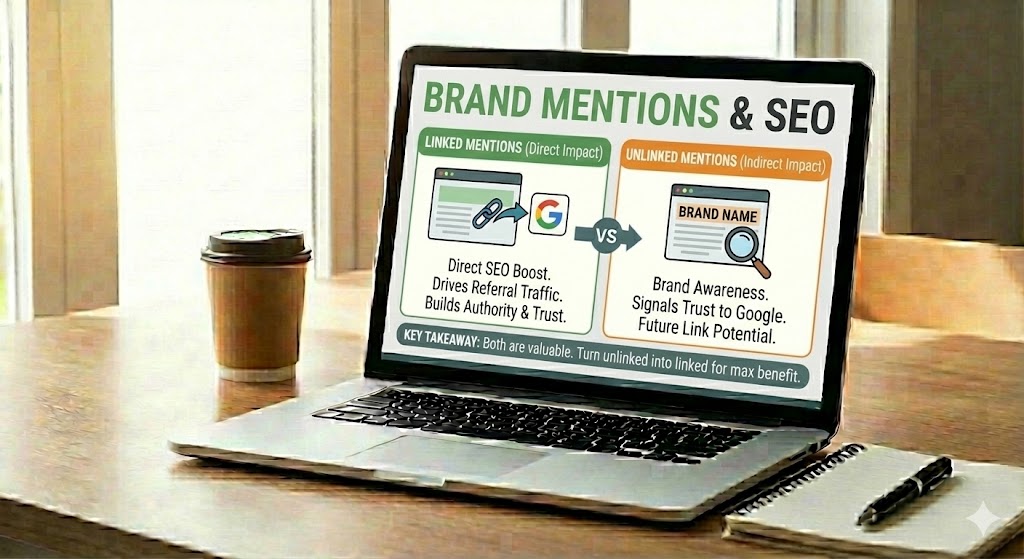
When people online talk about your business, website, or project by name, they are making a brand mention. This can happen in many places, like blogs, social posts, or news stories. A brand mention might include a clickable link to your site, or it might just use your name in text. Both types can send signals to search engines that your brand is real and noticed.
In modern SEO, brand mentions matter almost as much as traditional links. Search engines try to understand which names, companies, and websites are trusted on the web. When your brand is talked about often, in clear and natural ways, it helps search engines see you as a known entity. This can support better rankings, more visibility, and a stronger online reputation.
This beginner’s guide explains what brand mentions are, how they work with SEO, and how you can use them safely. You will learn the difference between linked and unlinked mentions, where they usually appear, and simple steps to earn them over time. The goal is to give you a clear base so you can use brand mentions as a steady part of your SEO plan.
Brand Mentions & SEO
Before looking at the details of different mention types, it helps to see how they fit into the bigger SEO picture. This section connects everyday references to the broader signals search engines use to judge brands.
Have you ever seen a company name pop up again and again while you browse? Those small moments, spread across many sites, can quietly shape how search engines judge that company.
In SEO, brand mentions & SEO signals work together to show whether people care about a name. When other websites talk about you in a neutral or positive way, it can strengthen trust, relevance, and perceived authority in search results.
Behind the scenes, search engines connect these references to your site, your topic, and your audience. Over time, consistent mentions across different sources help confirm that your project is a real entity, not just a random page. This makes later strategies—like building backlinks or improving content—more effective and more stable.
Introduction to Brand Mentions & SEO
Once you see how mentions support SEO in general, the next step is to understand why they appear so often around familiar names. This introduction shows how repeated references help define who is active and trusted online.
Why do some names seem to follow you around the web, even if you have never visited their site? Those repeated references are not random; they help search engines build a picture of who is active and trusted online.
In this context, Brand Mentions & SEO are closely linked. Each time your name appears on a page, in a comment, or inside a news story, it can support topical relevance, credibility, and online visibility. Unlike classic link building, these signals focus less on URL strength and more on how often, where, and in what setting your name is used.
Seen this way, brand chatter, citations, and references act like a web-wide reputation score. When they come from varied, natural sources and fit the surrounding text, they help search engines treat your project as a real entity that people recognise, talk about, and trust over time.
What Are Brand Mentions?
After seeing how mentions fit into SEO, it is useful to define exactly what counts as one. This section clarifies the basic idea and introduces the main types you will work with.
Imagine someone talking about you in a busy room. Even if you do not hear every word, you still know your name is in the air. Online, that spoken name becomes a written reference to your brand, and search engines can notice it.
In simple terms, a brand mention is any time your business, site, or project is named on a web page. It can appear in a blog post, a comment, a forum reply, or a social update. What matters most is that the name is clearly referring to you as a specific entity.
There are two main types of mentions that support Brand Mentions & SEO work:
- Linked mentions: your name is shown and also used as a clickable link that points to your page.
- Unlinked mentions: your name is written in text, but there is no direct hyperlink to your site.
Both kinds help search engines connect your name with topics, audiences, and contexts, but linked ones also pass classic link-based authority.
How Brand Mentions Help SEO
With the basics in place, the next question is how these references actually support rankings and visibility. Here you will see the quiet but important ways mentions reinforce your overall SEO efforts.
Think about the last time you kept seeing the same company name on different sites. Even without clicking, you slowly trusted it more. Search engines react in a similar way when they notice repeated, consistent references to the same name.
These signals do not replace every other SEO tactic, but they quietly support many of them. By looking at how often, where, and in what context your name appears, algorithms can build a clearer picture of your reputation, topic focus, and real-world presence.
- Trust and authority: Regular, positive mentions on stable sites suggest your brand is less risky and more reliable.
- Brand recognition: Seeing your name across blogs, forums, and news helps people remember you and search for you directly.
- Search engine confidence: Consistent references across sources make it easier for systems to treat you as a known entity, which supports stronger rankings over time.
Brand Mentions vs Backlinks
Knowing that mentions help SEO naturally leads to a comparison with traditional links. This part explains how these two signals differ while still working together in your strategy.
Have you ever wondered why SEO guides still talk so much about links when search engines can already read names and topics? This part will help you see how brand mentions and backlinks play different but connected roles in your strategy.
A backlink is a clickable hyperlink from one site to another. It passes classic link equity, which many algorithms still use as a strong ranking factor. A brand mention, by contrast, is mainly about naming and recognising an entity, even when no link is attached.
You can think of it this way:
- Backlinks = strong votes that can directly move rankings.
- Brand mentions = reputation signals that confirm who you are and what you relate to.
Because modern search focuses more on entities, context, and user behaviour, unlinked references still carry value. They may not push a page up the results on their own, but they support credibility, topic clarity, and long-term visibility when combined with a healthy link profile.
Linked and Unlinked Brand Mentions
After comparing mentions with backlinks, it is helpful to look more closely at the two main mention types. This section highlights how both linked and unlinked references contribute to your online reputation.
Have you ever seen your name tagged in a post, but other times only written in plain text? Both cases feel different to you, and search engines read them differently too. Understanding this difference helps you plan how to get noticed in a safer, smarter way.
In SEO, linked and unlinked brand mentions are two sides of one reputation signal. One passes classic link authority, the other quietly supports your entity recognition and topic strength, even without a click.
Linked mentions use your brand name as a clickable link. They can:
- Send direct visitors to your site.
- Pass link equity, which can help rankings.
- Show clear editorial trust, because someone chose to link to you.
Unlinked mentions only write your name in text. They still:
- Support entity signals by tying your name to certain topics.
- Increase brand familiarity across blogs, forums, and news.
- Help confirm your real-world presence, especially when repeated over time.
“Even without a hyperlink, consistent citations can reinforce brand authority signals.” – Bill Slawski
How Search Engines View Brand Mentions & SEO
Understanding the types of mentions sets the stage for seeing how algorithms interpret them. This section focuses on the way search engines turn scattered references into signals about your brand.
When many sites talk about the same name, search engines start to treat that name like a clear “thing” in the world. They do not just see random words; they see a recognisable brand or entity that people pay attention to.
Modern systems scan pages to understand who is mentioned, in what context, and how often. They connect your name with topics, locations, and other entities, building a simple map of what you are known for and who seems to trust you.
In this map, positive, natural brand mentions act like supporting clues. Algorithms may look at:
- How clear and consistent your name is written.
- The quality and relevance of the page that mentions you.
- The words around your name, which hint at your main themes.
Over time, these signals help search engines feel more confident that your brand is a real entity with a stable presence, making your other SEO efforts work more smoothly.
Practical Tips to Use Brand Mentions for Better SEO
Knowing how mentions are interpreted is only useful if you can act on it. This part turns the concepts into simple habits that naturally attract more valuable references.
Have you ever noticed how some projects quietly gain attention without shouting or using tricks? That usually comes from steady references across the web, built on simple, repeatable habits.
This section shows easy actions you can take to attract more useful references over time. The focus is on safe, natural methods that fit into normal content and outreach work.
Start by making pages that people actually want to talk about. Helpful guides, clear FAQs, and small tools or checklists often earn organic references from blogs and forums because they solve a real problem.
- Write practical tutorials that others can cite.
- Publish short data summaries or simple case notes people can quote.
- Update old posts so they stay accurate and mention‑worthy.
Next, let others know your work exists. Simple outreach—like politely sharing a resource with a blogger or joining a niche forum—can lead to natural name drops when your answer or tool is useful.
- Join discussions and give clear, non‑sales replies.
- Offer short comments on articles that relate to your topic.
- Share small news about your project that sites might cover.
As more people mention you, keep track of where your name appears. A basic list in a spreadsheet helps you see which places respond and where you might return later with new, helpful material.
Bringing Brand Mentions & SEO Together
All of these pieces come together in a single idea: mentions are a quiet foundation for long-term visibility. This final section ties the concepts into a simple takeaway you can apply to any project.
Brand mentions turn your name into a clear entity that search engines can recognise, connect to topics, and measure over time. When these references appear in natural places and contexts, they quietly support trust, relevance, and online visibility, whether or not a clickable link is present.
By understanding how linked and unlinked mentions differ from classic backlinks, you can see brand chatter as a steady background signal—not a shortcut, but a long-term support for your wider SEO work. Consistent, positive mentions help search engines feel more confident about who you are, what you do, and why people pay attention to you.
As you create useful content, join real discussions, and share honest updates about your project, you build a web of natural citations that strengthens every other SEO step and supports sustainable growth.