
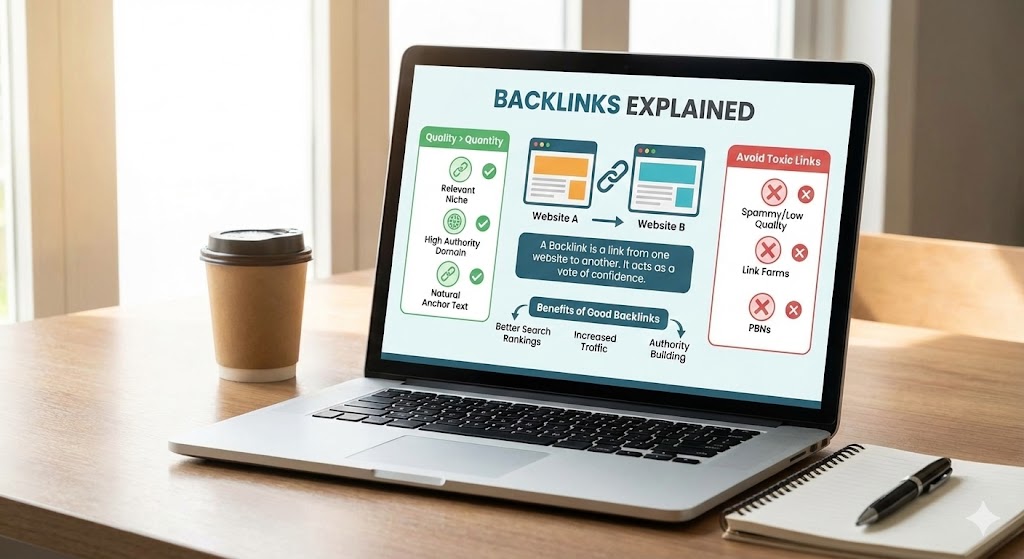
Backlinks are links from one website to another. When a different site links to your page, it is called a backlink. You can think of it like a friend pointing people toward your work and saying, “Look here, this is useful.” These links connect pages across the web, creating a giant network of information that both people and search engines can follow.
They are very important for Search Engine Optimization (SEO). Search engines use backlinks to help decide which pages are more helpful, trusted, and relevant. When many good websites link to your page, it sends a strong signal that your content has value. This can help your pages show higher in search results and reach more visitors.
Throughout this guide, you will see what backlinks are, how they work, and why some links can help you while others can hurt you. You will also learn the difference between good backlinks and bad backlinks, and how search engines treat them. By the end, you will understand the basic rules of backlinks so you can build a safer, stronger SEO strategy, even if you are just starting.
Backlinks Explained
To start, it helps to picture how links actually connect different places on the web. Instead of random clicks, you can think of backlinks as signposts that guide both people and search engines toward useful pages.
Imagine the web as a big city and every page as a house. When one house hangs a sign that points to another house, people know which place to visit next. That sign is like a backlink.
To understand them clearly, you can break a backlink into two simple parts. There is a source page, where the link sits, and a target page, which receives the click. The strength of that recommendation depends on who is doing the pointing and how they do it.
In practice, a link usually has three basic pieces:
- Anchor text – the clickable words you see.
- URL – the address the click goes to.
- HTML attribute – tells if it is DoFollow or NoFollow.
Search engines treat this tiny HTML element like a hint. A normal link passes ranking power, while a tagged link may pass only traffic and context, not full SEO value.
Introduction to Backlinks Explained
Now that you know what a backlink looks like, it is time to see why these simple links carry so much weight. Understanding their deeper role will help you use them safely instead of treating them as just numbers to chase.
Have you ever wondered why some pages show up first in search results while others seem hidden? One major reason is how many other sites are willing to point people toward them. These quiet recommendations travel through the web as backlinks, shaping which pages get noticed and which are ignored.
In this part of the guide, you will look a bit deeper at what makes these links so powerful. Instead of only seeing them as simple clicks, you will start to view them as signals of trust, relevance, and quality that search engines measure carefully. This will prepare you to tell helpful links from risky ones and to plan a safer SEO path.
- Each backlink is a small signal of confidence in your content.
- Many strong, relevant links can boost visibility and organic traffic.
- Poor, spammy links can increase the risk of penalties and ranking loss.
What Is a Backlink?
With the concept of recommendations in mind, you can look more closely at how backlinks connect the web. Seeing them as paths instead of isolated links makes it easier to understand why they matter so much in SEO.
Think of the internet as a web of paths instead of a pile of separate pages. Some paths are short and simple, others are long and powerful, and each one quietly tells search engines which pages people should notice first.
A backlink is a clickable path from one site to another. It starts on a source page and ends on a target page, carrying both visitors and signals of trust. When another website links to you, it is giving a small public recommendation that your content is worth a visit.
These links do more than just move people around. Because each backlink points from one domain to a different domain, it helps search engines map how topics, brands, and ideas are connected across the web. Over time, a collection of relevant, trustworthy backlinks can act like a visible track record of your site’s usefulness.
- Text people click (anchor text) describes what they expect to see.
- HTML attributes like rel=”nofollow” guide how much ranking power is shared.
Backlinks Explained: Why They Matter for SEO
Once you know what backlinks are, the next step is seeing how they affect your place in search results. Their impact goes far beyond simple clicks and plays a central role in how pages are ranked.
Why do some pages climb to the top of search results while others stay buried, even when both look useful to humans? A big part of the answer lies in how many strong, relevant recommendations they earn from other sites. Those quiet recommendations are the backlinks you are learning about in this guide.
From a search engine’s point of view, these links are not just doors for visitors. They act like signals that help rank, sort, and discover pages across the entire web. Understanding this role will help you focus on the types of links that genuinely support long‑term, stable growth.
One major effect is on trust and authority. When respected websites link to a page, search systems read that as proof that the information is more likely to be accurate, useful, and safe. Over time, a strong pattern of these links can turn a small site into a recognized source within its topic.
Backlinks also influence how quickly new or updated content is found. Links from active, frequently crawled pages can help search bots reach your pages sooner, which may lead to faster indexing and earlier visibility for fresh articles, products, or tools.
- Relevant links from pages on similar topics strengthen your position for those subjects.
- Diverse sources (different domains, not just one) hint that your content is valued widely, not only in one small corner of the web.
- Consistent growth in backlinks over time looks more natural than sudden spikes, reducing the chance of spam warnings.
All of this matters because search algorithms try to surface results that users will trust on the first click. By earning a profile of clean, topic‑matched backlinks, you make it easier for those algorithms to choose your pages over similar ones with weaker link histories.
How Search Engines Use Backlinks Explained Simply
Understanding why backlinks matter leads naturally to the question of how search engines actually use them. By looking at what they measure, you can better shape a link profile that feels safe and natural.
When two pages say almost the same thing, how does a search engine decide which one to show first? One big clue comes from how many other sites are willing to point visitors toward each page.
Modern search systems treat each backlink like a tiny signal of trust. They use these signals to sort, compare, and judge pages so results feel helpful instead of random.
Behind the scenes, algorithms look at more than just the number of links. They study who links, how they link, and why that link exists. This turns a simple click into a rich data point that can raise or lower your position in results.
- Source quality – links from trusted, well-maintained sites carry stronger weight.
- Topical match – links from pages on similar themes send a clearer relevance signal.
- Natural patterns – slow, steady link growth looks safer than sudden, spammy spikes.
Types of Backlinks Explained for Beginners
So far, backlinks may sound like a single, simple thing, but they come in several common forms. Knowing these basic types helps you spot which ones are more valuable and which mainly add context or traffic.
Not every link that points to your site works in the same way. Some can strongly support your rankings, while others mostly send visitors or just add context. Understanding these basic types helps you make smarter choices when you try to earn more links.
At a simple level, each type differs in how much ranking power, trust, and visibility it can pass. By learning these differences now, you can avoid chasing empty numbers and instead focus on the links that truly help your SEO grow safely over time.
- Editorial links added naturally inside useful articles.
- Resource links from lists, tools pages, or guides.
- Profile and directory links from business or author pages.
- User-generated links from comments or forum posts.
“The best links are earned, not bought or forced.” – Rand Fishkin
Good Backlinks vs Bad Backlinks
Once you can tell different link types apart, the next step is judging their quality. Some backlinks strengthen your site, while others can quietly work against you.
Have you ever noticed that not every recommendation you get in real life feels equally helpful? Online links work the same way: some point to useful, trusted pages, while others feel fake or pushy. Understanding this difference helps you grow safely instead of guessing.
In simple terms, good backlinks make your site look more trusted, and bad backlinks can quietly damage your reputation. The goal is not just “more links,” but better, safer links that match your topic and visitors.
- Good backlinks usually come from real, relevant websites with helpful content.
- They sit inside meaningful text, where the anchor text fits the page naturally.
- They are earned because your content is useful, not because you paid or traded in secret.
On the other side, bad backlinks often come from spammy, low‑quality pages that link to almost anyone. These links can look like they were built only to trick search engines.
- Lots of links from unrelated topics (for example, a cooking site linking to a casino page).
- Links from link farms or huge pages that list hundreds of random websites.
- Paid, hidden, or forced links that give no real help to readers.
Search engines try to reward natural, useful recommendations and reduce the effect of anything that looks fake. When your profile is mostly clean, strong links, your site can grow more steadily with less risk of sudden drops.
Backlinks Explained vs Internal Links
So far, the focus has been on links that come from other websites, but your own pages can connect in powerful ways too. Seeing how backlinks differ from internal links will help you build a clearer overall structure.
Backlinks are links from other websites that point to your pages. They act like public recommendations and can strongly affect how search engines judge your trust and authority. In contrast, internal links are links between pages on the same domain, and they mainly help search engines and users move through your own content more easily.
While external votes can push your rankings higher, a clear internal structure makes it easier for crawlers to find, group, and understand your pages. A simple way to see it is: backlinks bring authority in, and internal links spread that authority around your site so important pages get more attention.
- Backlinks: off‑page signals, harder to earn, high impact on authority.
- Internal links: on‑page structure, fully under your control, guide both users and bots.
Bringing Backlinks Together for Safer, Stronger SEO
All of these pieces fit together into a simple idea: links shape both how users move and how search engines judge your site. Understanding the basics is enough to start building a stable foundation.
Backlinks are more than simple clicks between pages. They act as signals of trust and relevance that help search engines decide which sites deserve more attention. By now, you have seen how each link, its anchor text, and its HTML attributes quietly shape how your pages are judged.
The main lesson is that quality, context, and honesty matter far more than raw numbers. Good backlinks come from real, topic‑matched pages and grow at a natural pace. Bad or forced backlinks may look like quick wins, but they carry higher risk and weaker long‑term value.
As you move forward, treat backlinks and internal links as a combined system: backlinks bring in outside trust, while thoughtful internal links guide that strength to your most important pages. Start small, focus on useful content that others genuinely want to reference, and you will build a safer, beginner‑friendly SEO foundation that supports steady growth over time.