
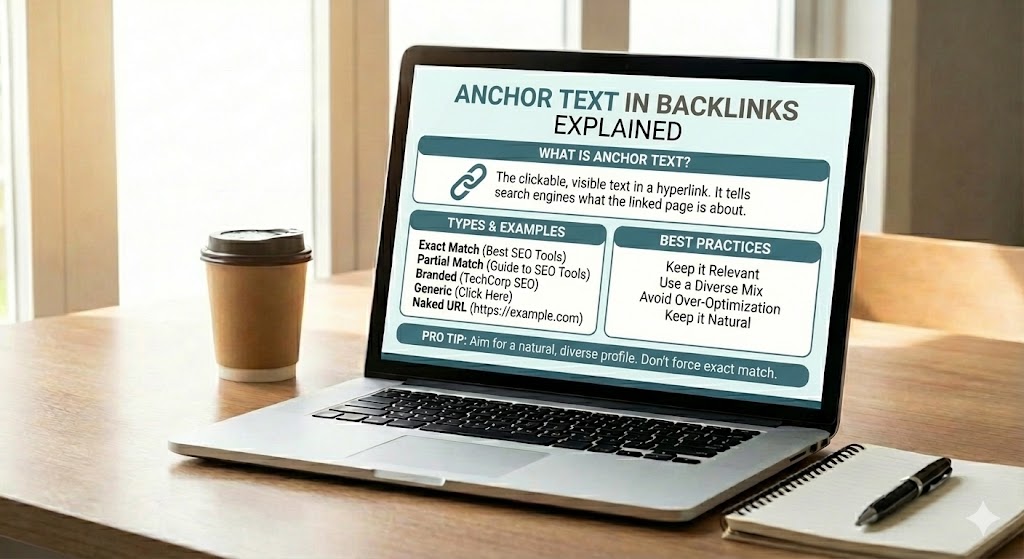
When you click on a word or short phrase on a web page, and it takes you to another page, that clickable text is called anchor text. In backlinks, this text is very important because it tells search engines and people what the linked page is about. If the anchor text says “easy pizza recipe,” search engines expect the page to be about pizza recipes.
Anchor text matters for SEO because it gives strong clues about the page’s meaning and topic. Search engines use these clues, along with many other signals, to decide which pages to show and how high to rank them in search results. Clear, honest anchor text helps search engines match pages to the right searches.
When many different sites use natural and relevant anchor text to link to the same page, it can help show that the page is useful, trusted, and focused on a specific subject. However, if anchor text is used in a fake or spammy way, it can confuse search engines and even cause problems. Learning how to use anchor text correctly in backlinks is a key skill for safe and effective SEO.
Anchor Text in Backlinks Explained
To understand backlinks properly, you first need to see how anchor text works inside them. These short phrases act like labels that describe the page you are about to visit and set expectations before anyone clicks.
Imagine trying to guess what a book is about just from its title. That is what search engines do with anchor text in backlinks: they use those few words as a quick label for the page you land on.
In this part, you will see how different wording choices can change that label and send very different signals to Google. You will also learn simple ways to keep those signals clear, honest, and safe for SEO.
Good backlink anchors usually follow a few easy ideas: they match the topic, fit smoothly in the sentence, and do not repeat the same keyword over and over. When these rules are respected, links look natural to both readers and search engines, which lowers the chance of spam signals or penalties.
Introduction to Anchor Text in Backlinks Explained
Once you know the basic role of anchor text, the next step is to see how it shapes meaning more deeply. This section looks at anchors not just as labels, but as tiny summaries that influence how pages are understood.
Have you ever wondered how Google guesses what a page is about before you even click? One of the quiet clues it uses is the tiny line of words that forms the link itself. Those words shape how search engines and people first “label” a page in their minds.
In this part, the focus moves from basic meaning to how anchors actually guide understanding. Instead of seeing them as just clickable phrases, you will see them as mini summaries that add context, intent, and even trust signals to every backlink.
When backlinks use wording that matches the user’s goal—for example, “compare phone prices” versus “phone history”—they quietly tell Google whether the target page helps with research, buying, or learning. Over hundreds of links, this mix of anchors helps build a clear picture of a page’s main purpose and audience rather than just its topic.
Because of that, smart SEO work looks at anchors as part of a bigger story: they should blend with surrounding text, reflect real language that users would say, and vary naturally across different sites. This makes a backlink profile look healthy, human, and hard to fake, which is exactly what modern search algorithms try to reward.
What Is Anchor Text and How Do Search Engines Read It?
Before you can use anchor text well, it helps to know how search engines actually see it. Behind every blue link is simple HTML that crawlers read and interpret as signals about relevance and intent.
When a crawler scans a page, it does not see a colorful button or a fancy design. It mainly sees words, code, and links. The small piece of linked text becomes a tiny label that helps systems guess what lies on the other side of that link.
Search engines read this label together with the words around it, the page it sits on, and the page it points to. By mixing all these signals, they can decide whether the link is relevant, trustworthy, and helpful for a specific search.
In simple terms, anchor text is the clickable text inside a link tag. When bots crawl HTML, they read the <a> element, record the target URL, and store the anchor text as one clue about the target page’s topic and possible user intent.
- Words inside the link hint at the subject (for example “best running shoes”).
- Nearby sentences add context, such as price, location, or type of content.
- Many anchors from many sites help confirm what the page is really about.
Because of this, modern algorithms treat anchors less like tricks and more like evidence of how humans describe a page. If that description feels natural, varied, and honest, it usually supports safe, long-term rankings.
Why Anchor Text Is Important in Backlinks
Understanding how search engines read anchors makes it easier to see why they matter so much in backlinks. This section connects those technical signals to practical outcomes like relevance, rankings, and user intent.
Imagine trying to solve a puzzle with only one small piece. That is what search engines face without clear anchor text. These few words help complete the picture so Google can see how pages connect and which ones deserve to show up for a search.
Anchor words inside backlinks matter because they give extra meaning, context, and direction. They do not work alone, but they strongly support other signals like content quality and user behavior.
Some of the biggest benefits come from how anchors guide topic understanding and user intent. When many sites use honest phrases, they help machines see a stable pattern.
- Topic relevance: anchors show what subject the target page covers in simple terms.
- Context for search engines: nearby text and the link label together explain why the page was linked.
- Better page understanding: varied, natural anchors help algorithms group pages into the right search intent buckets, such as learning, comparing, or buying.
Key Types of Anchor Text in Backlinks Explained
Not all anchors send the same kind of signal, even if they point to the same page. Here you will see the main anchor text types and how each one affects risk, relevance, and naturalness in your backlink profile.
Not every link label sends the same message. Different anchor text types tell search engines slightly different things about the page you land on, so understanding these groups helps you stay both effective and safe.
Below are the main categories used in SEO. Each one has a simple pattern, a typical use case, and a level of risk if you repeat it too much across your backlink profile.
Exact match anchors use the full target keyword as the link text, such as “best running shoes” linking to a page trying to rank for that same phrase. These can be powerful signals but, when used in bulk, they often look unnatural and manipulative to modern algorithms.
Partial match anchors include your keyword plus other words, like “guide to the best running shoes for kids.” They still show clear relevance but appear more like normal language, which usually makes them safer for long‑term SEO.
Branded anchors use a company or site name, while naked URL anchors show the full link (for example, “example.com/best-shoes”). These styles help build trust and recognition and are common in natural mentions, interviews, and citations.
Finally, generic anchors such as “click here” or “read more” add very little topic information. A few of them are fine for user experience, but relying on them too often wastes a chance to send clear relevance signals about your content.
Good vs Over-Optimized Anchor Text in SEO
Knowing the main anchor types sets the stage for using them in a balanced way. This part compares healthy patterns with risky, over-optimized ones that can trigger spam signals.
Have you ever seen a page where the same keyword is linked again and again in almost every line? That is where the line between good anchor use and over-optimization is often crossed.
Healthy anchors feel like normal writing. They use clear, helpful phrases, but they also show variety: branded words, partial matches, and even simple labels when needed. This mix helps search engines trust that links were added for real readers, not just for rankings.
Over-optimized anchors, on the other hand, push the same keyword in most backlinks. For example, a shoe blog getting 50 links all using “buy cheap running shoes” looks artificial. Google can treat this as a sign of manipulation, which may reduce ranking power or trigger a manual review.
- Good pattern: natural language, mixed anchor types, links placed where they help users.
- Bad pattern: repeated money keywords, anchors forced into text, links from low‑quality sites.
How to Choose and Use Anchor Text Safely (Ratios, Penalties, and Mistakes)
After seeing what over-optimization looks like, the next step is learning how to avoid it. This section focuses on creating natural anchor profiles that reduce penalty risks without chasing strict formulas.
Think of every backlink as a tiny vote, and the anchor text as the note written on that vote. If those notes all say the same thing, in the same way, sooner or later search engines may suspect that the votes were arranged rather than earned.
To avoid that, you need a simple plan for choosing anchors that look natural, stay varied, and match real user language. This plan does not chase “perfect numbers” but focuses on healthy patterns that are hard to fake.
For most sites, a safe mix often leans toward branded, URL, and partial‑match anchors, with only a small share of exact matches for core pages. Instead of aiming at a fixed percentage, watch whether your profile looks like something many different authors would create on their own.
- Avoid stuffing “money keywords” into every backlink.
- Prefer anchors that fit the sentence and describe the page honestly.
- Check for repeated wording patterns that could look automated.
When unnatural repetition or forced phrasing appears, that is where penalty risks begin. Keeping anchors reader‑first and context‑driven is the easiest way to stay on the safe side of modern algorithms.
Best Practices, Myths, and Related SEO Topics on Anchor Text
Once the basics feel clear, it is helpful to tie them into everyday SEO decisions. This part turns ideas into practical guidelines and clears up common misunderstandings about anchor text.
What happens after you understand the basic types of anchors but still feel unsure about using them in real projects? This is where clear rules, common myths, and related SEO ideas help turn theory into safe daily practice.
For long-term results, anchors must support users first and rankings second. The points below show how to keep your backlink profile balanced, honest, and easy to maintain over time.
Use these simple best practices to guide most decisions:
- Prefer natural phrases that fit the sentence and match the target page.
- Mix branded, partial-match, and URL anchors instead of repeating one keyword.
- Keep “money” terms rare in backlinks you control, but let others write in their own words.
Several myths still confuse beginners. It is not true that you must hit a fixed anchor ratio, that exact match is always bad, or that generic anchors never help. In reality, search engines look at patterns, context, and intent rather than strict numbers.
To build a broader strategy, connect anchors with other off‑page SEO areas like link quality, topical authority, and brand signals. Related subjects include digital PR, E‑E‑A‑T, spam policies, link velocity, and internal linking architecture, all of which shape how your anchor text is finally interpreted.
Bringing Anchor Text and Backlinks Together for Safe, Long-Term SEO
All of these ideas come together when you view anchor text as one part of a bigger SEO system. Used well, it supports both human readers and search engines over the long run.
When you put all these ideas together, anchor text becomes more than just a blue word on a screen. It is a small but powerful signal that helps search engines connect pages, understand topics, and guess user intent across the web.
The core takeaway is that clear, honest, and varied anchor text creates a backlink profile that looks natural, trustworthy, and aligned with modern spam policies. As you refine your SEO, keep anchors consistent with strong content, relevant links, and overall E‑E‑A‑T so that your approach to Anchor Text in Backlinks Explained remains a safe, long-lasting SEO practice.