
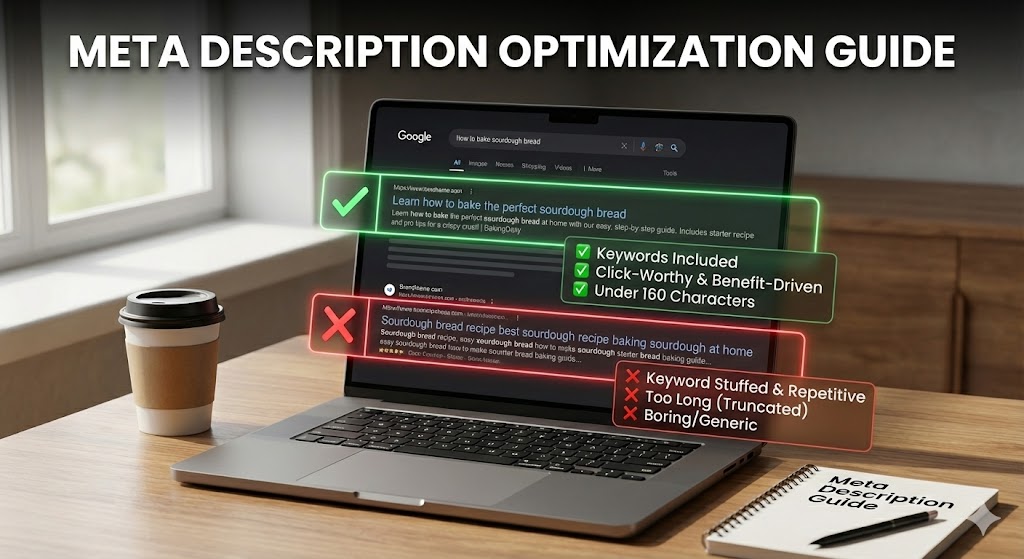
Meta descriptions are short pieces of text that tell people what a web page is about. They usually appear under the page title in search results and help users decide if they should click. A clear and useful meta description can guide both search engines and readers by giving a fast preview of your content.
Even though meta descriptions do not directly change where your page ranks, they strongly affect how many people click your result. When more users click your page because your meta description is helpful and attractive, it sends a positive signal that your page might better match their needs. Over time, this can support better overall search performance.
This guide is written in simple language for beginners who want to learn how to write strong meta descriptions. You will learn what they are, how they appear in search, and how to avoid common mistakes. By the end, you will know how to create short, clear, and click‑worthy descriptions that make your pages stand out in search results and support your wider SEO work.
Meta Description Optimization Guide
Some search results naturally feel more appealing than others, even when the titles look almost identical. That extra pull often comes from a carefully written meta description that quietly “sells” the page. This section explains practical ways to polish that small block of text so it works harder for you.
To get the most from this Meta Description Optimization Guide, focus on clarity first, then refine the small details that make your snippet more attractive. Write in everyday language, as if you are talking to a friend who has only a few seconds to decide. Done well, this helps both people and search engines understand why your page is worth a click.
- Start with the main benefit the reader will get from the page.
- Include your main keyword in a natural, non‑spammy way.
- Keep it within about 120–155 characters to avoid being cut off.
- Match the real content of the page so visitors are not misled.
- Use action words like “learn,” “discover,” or “find out” to guide users.
What Is a Meta Description?
Every time you search on the web, you see more than just blue titles in the results. Under most titles sits a brief line or two of text, giving a quick idea of what the page contains. That small block is what people usually mean when they talk about a meta description.
A meta description is a short summary that tells people what a page is about before they click. It is added in the page’s HTML as a meta tag, and search engines often use it to create the text shown in results. You can think of it as a mini‑advertisement for your page’s content, written in clear, honest language.
In most search results, this summary appears directly under the blue page title, in a smaller, darker line of text. It usually shows one or two short sentences that explain the main idea of the page. When written well, this short text helps users quickly decide whether your page matches what they want.
Do Meta Descriptions Affect SEO Rankings?
Many site owners assume that better snippets must automatically mean higher rankings, but search engines work in a more complex way. Understanding what meta descriptions can and cannot do helps you focus your effort where it truly matters.
Most major search engines have stated that the meta description tag is not a direct ranking factor. Adding more keywords to this field will not push your page higher by itself. The search algorithm looks more at content quality, relevance, links, and user experience than at this short summary.
Even without direct impact, descriptions still matter because they influence how many people click your result. A clear, honest line of text can raise your click‑through rate (CTR), which tells search engines that users prefer your page over similar options.
Over time, this stronger engagement can support better visibility. Think of the meta description as a bridge between your ranking and the user’s decision: it does not move the ranking itself, but it helps turn views into visits.
Ideal Length for Meta Descriptions in a Meta Description Optimization Guide
Because your snippet must convince someone to visit your page in only a moment, every character counts. The right length keeps your message clear while making sure the full line is visible in search results.
Most SEO specialists suggest keeping this text within an ideal range of about 120–155 characters. Within this space, you can usually fit one or two short sentences that share the main benefit and a natural keyword without wasting room. This size helps avoid sudden cuts where search engines add dots at the end of your snippet.
Very short lines, such as 40–60 characters, often feel too empty and vague, giving users little reason to click. Extremely long ones may be truncated, hiding important details or calls to action. A simple rule is to write just enough to answer: What is this page about, and why should I open it now?
Best Practices for Writing Meta Descriptions
Think of your meta description as a tiny sales pitch competing for attention on a busy results page. With so little space, each word must earn its place and clearly support the click.
The habits below help you turn that short text into a useful guide for both users and search engines. When you follow them, visitors have a clear reason to choose your page over another one.
Begin with a clear summary of the page in plain language. In one quick look, readers should know the main topic and who the content is for. Avoid vague claims; instead, explain the real benefit, such as saving time, learning a method, or solving a problem.
Then add your main keyword naturally. Write it as you would say it out loud to a friend, without repeating it many times. This helps search engines connect your snippet to the query while still sounding human and readable.
- Use action words like “learn,” “compare,” or “start.”
- Match the user’s search intent, such as learning, buying, or fixing something.
- End with a soft call to action, for example: “Learn the steps today.”
Meta Description Optimization Guide: Good and Bad Examples
Seeing theory in action makes it much easier to understand what a strong snippet looks like. By comparing weak and improved versions side by side, you can quickly spot patterns to copy or avoid.
Use the examples below as simple, beginner‑friendly models. They show how a few careful edits can turn a flat line into a clear, click‑worthy snippet that better reflects your page.
- Poor: “Home page – welcome to our site, we offer many services and information.” Better: “Learn easy steps to write strong meta descriptions that boost clicks on your pages.”
- Poor: “Best tips, guides, tricks and more about everything you need today.” Better: “Discover a simple Meta Description Optimization Guide with examples, templates, and quick writing tips.”
- Poor: “Click here now for more details and great offers you can’t miss.” Better: “Find out how to fix common meta description mistakes and attract the right visitors to your site.”
Common Meta Description Mistakes Beginners Make
Even a well‑designed page can struggle in search if the snippet underneath the title is weak. Small errors in this tiny piece of text often explain why impressions do not turn into clicks.
By spotting these issues early, you can avoid wasting views and turn more impressions into visits. Below are frequent traps new site owners fall into when using a Meta Description Optimization Guide for the first time.
- Leaving the field empty, which lets search engines grab random text from the page.
- Stuffing keywords so the line sounds robotic and spammy.
- Writing vague promises like “best tips and tricks” without a clear benefit.
- Copying the same text across many pages instead of describing each one.
- Misleading readers by promising content that is not actually on the page.
- Ignoring search intent, such as using sales language on an information page.
- Forgetting calls to action like “learn how” or “see the steps,” which guide the click.
Meta Description Optimization Guide: When and How to Update Descriptions
Meta descriptions should grow with your site, not stay frozen while your content changes. A mismatch between the snippet and the page is a clear sign that it is time for a refresh.
Updates are most important when the content, audience, or goals of a page have shifted. Instead of changing every line often, focus on pages where a better summary can quickly improve results.
Plan to review this small text whenever you launch a new product or service, rewrite a key article, or change your offer. It is also wise to adjust the description if you see very low click‑through rate in your analytics, even though the page already ranks and gets impressions.
- Major content updates: new sections, new data, or a different main topic.
- Seasonal changes: sales, events, or time‑limited offers now out of date.
- Shifts in user intent: people now search more to compare, not just learn.
Over time, language that once felt fresh can become unclear or too generic. A short rewrite that adds a strong benefit and clear call to action can make an old page feel new again in search, without touching the main content at all.
Turning Small Snippets into Powerful SEO Assets
Across this Meta Description Optimization Guide, meta descriptions have appeared as small pieces of text with a big job: they explain your page, guide expectations, and help turn plain impressions into real clicks. Used well, they become a simple tool that supports your wider SEO work.
Although they are not a direct ranking factor in search algorithms or search engine result pages, they strongly shape how people react to your listings. Keep each snippet as a small, focused promise that briefly answers what the page is about and why it is worth a visit, and you will steadily build search results that earn more trust, more clicks, and more meaningful traffic over time.